Have you been hooked by the idea of book clubs lately? Wondering how you can integrate book clubs with essential questions, supplementary short stories and podcasts, and everything else you’re up to? Then today’s episode is for you. Today’s “Plan my Lesson” request comes from a creative teacher trying to blend a lot of wonderful things into her new plan for the year.
Here’s what she writes: “Hi, Betsy! I am a huge fan and avid listener! As a teacher who is nearing retirement, I found myself in a slump. You’ve been an inspiration! I have completely changed my curriculum for next year (we are mid-process in curriculum writing). For the first time, all of my classes are completely novel based using lit circles. I have selected five titles for students to choose from each quarter with plans to supplement like crazy with nonfiction pieces, Ted talks, podcasts, etc. I have created an overarching essential question for each semester to tie all the pieces together. It’s a bit overwhelming, but I am super excited to get started! Any ideas you have specific to lit circles would be much appreciated! And if I can figure out a way to intertwine genius hour, I would be thrilled 😊”
So today we’re diving into this wonderful creative planning process. We’ll start by looking at a big picture structure that can help support all these wonderful pieces while creating consistency throughout the term, then dive into a single day in the life lesson for balancing all of these elements.
The Big Picture
This teacher is going to be combining a lot of key pieces into the schedule for the year, so before we jump into a single day, let’s just look at what a week might be like. When it comes to book clubs, I’d recommend choosing two or three days a week for meetings, and making other plans for other days.
Especially with book clubs anchoring the curriculum all year long, I think they’ll get old if you do them every day. So I’d consider something like Mondays for short supplementary pieces and mini-lessons on whatever you’re focused on, Tuesdays for book clubs and some kind of multimedia, like a related mini-documentary or podcast, Wednesday for working on any ongoing project or writing piece, as well as a chance to read in class (either choice reading or the book club book – during which you can check in individually with readers to make sure they’re doing OK), Thursday again for book clubs and possibly some genius hour prep or check-ins to prepare for genius hour on Friday, and Friday for genius hour and maybe a short First Chapter Friday reading.
This general structure will hopefully take the overwhelm out of planning, as everyone can adjust to the consistency of the routine. Students will have plenty of time to read a chunk of their books for book clubs, as well as dive deeper with the essential question through shorter pieces, have some teacher instruction, build their choice reading interests, and develop a genius hour project over the course of the term.
Agenda and Attendance Slide
As usual with every lesson, I suggest you start with your agenda on the board and a short attendance question as students come in.


A Plan for Thursday
So today as we plan a lesson, let’s imagine it’s the first Thursday of the year. Students are sorted into their book clubs following a book tasting and they’ve read a chunk of their book. So you’re having your first book club meeting and introducing genius hour for the first time. So exciting!
The Book Club Meeting
There are so many ways to approach a book club meeting with your students, and some of it depends on their age, level, and comfort with independence. As this is the first book clubs meeting, take a few minutes to brainstorm with students on what it takes to be a stellar book club participant and create an anchor chart on your wall, or pass out a little set of guidelines like those below.

Now, it’s meeting time. But how to begin?
Having run a more formal literature circles approach in the past, I really don’t recommend it. I wouldn’t give your students roles to fulfill, but approach the meeting with more flexibility. But I also wouldn’t just say “get together and talk about your books,” as you’ve got a high risk that many groups will be done in a few minutes.


Therefore, at least at first, I’d suggest giving students a warm-up to help push them in the direction you want to go, or a mini-project to work on together that suits any book.
A warm-up can focus on anything you want them to dive into, like what they’re noticing about the setting or style, questions they have about characters or plot, the point-of-view, the literary devices, etc. Whatever you have them do, it should set them up to move into a conversation.


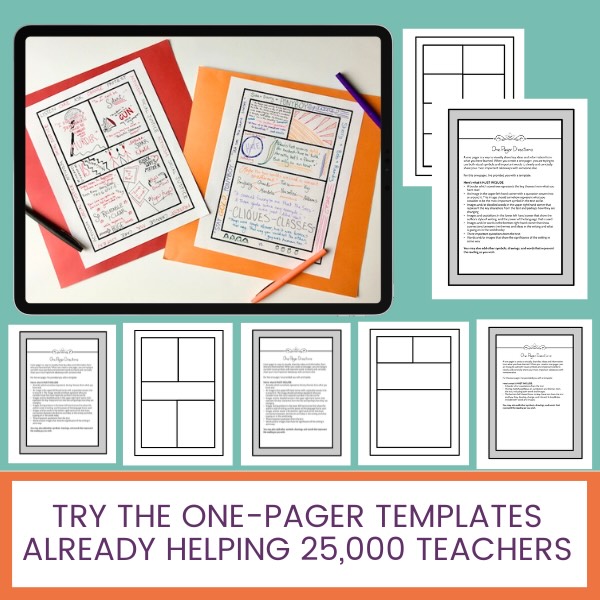
For a somewhat more structured approach, you can provide a group activity that works for any book, hits your main objectives, and keeps them working together for most of the meeting, maybe leaving a little time for free discussion at the end. These could include activities like a silent discussion, hexagonal thinking (they choose the terms), reader’s theater, one-pagers, etc.


This first meeting should give you a lot of information about how your groups are doing, and direct you on how structured you want to be. As with anything, students are likely to get more comfortable with book clubs over time, so you may want to start with a more structured approach and relax into giving them more time just to talk as the year progresses.
At the end of this first meeting, make sure students know what chunk of the book they’re reading next and when the next meeting is, then you can move on to introducing genius hour.
Introducing Genius Hour
OK, once those book club meetings wrap, you should have some time left to introduce genius hour (woo hoo!). I’ve created a short video to help you do it if you wish (watch the video here). You can share about the origins of genius hour / 20 time at Google, and why you think it’s important for students to have time to pursue their own interests.

Genius hour lends itself very well to ELA, because it’s so easy to build in a documentation element. So on this first day, you’ll want to get students brainstorming about what they’d like to do with their project AND what platform is going to work best for their documentation: blogging, vlogging, an Instagram-style feed of photos and text, or podcasting. All of these platforms will give them a venue to develop their ELA skills while pursuing their passion.


In the genius hour materials I’ve created for The Lighthouse, I put a lot of emphasis on organizing materials, like a checklist of project components and a calendar to help students schedule their time. Sharing materials like these early, and letting students know which days and for how long they’ll be working on the project, can help them start to see what they can do and how they can break down the steps.


Exit Activity
Because most of the class period has been taken up with book clubs, you’ll just have a little time here on genius hour, but I’d suggest passing out a half-sheet exit ticket and having students share three possible ideas for their genius hour project as they walk out the door. You’ll be following up soon with more time to devote to getting started, but this way you can see who seems confident with their ideas and who might need some help from you to find one that will work.
Teaching Takeaways
Today let’s talk about FLEXIBILITY. Book clubs require a light-on-your-feet approach as you may have students in different periods who need more or less structure from you, and even different groups that need more or less. Keep in mind that book clubs can be highly structured, with activities that take up the whole time, activities that get them going, or free conversation for confident groups who are ready for independence. So many things in class can be this way.
Another takeaway today is just the concept of genius hour. I was excited to see this request for a lesson because I LOVE genius hour, and I wish I saw it happening more. But it does take a fair amount of prep and structure to help kids be successful. If you’re just hearing about it for the first time, and you’d like to know more, I suggest going back to listen to episode 291, When Genius Hour Works, which is a great specific walkthrough of one teacher’s successful genius hour program.