Jason Reynolds made me a novel-in-verse believer. “If you were to tell me you were afraid of dogs,” he said, in an interview with PBS on why he wrote a verse novel for kids, “I wouldn’t then return to you with a pack of pit bulls. I wouldn’t invite you out to a quiet evening over dinner and Cujo. However, what I might do is casually walk you by one of those doggy daycares. The ones with the pups small enough to fit in the palm of your hand.” Reynolds argues that verse can help kids gently return to reading when they’ve turned completely away from it. He equates the poetic form with the tiny puppy. “Poetry,” he says, “has the ability to create entire moments with just a few choice words. The spacing and line breaks create rhythm, a helpful musicality, a natural flow. The separate stanzas aid in perpetuating a kind of incremental reading, one small chunk at a time.”
Recently, I’ve been teaching novel-in-verse as a genre, as we’ve explored Jason Reynolds’ Long Way Down in my 9th grade class. I’ve also been spotlighting them through displays and book talks, which has meant previewing books as fast as I can. This fall, I’ve read Rajani LaRocca’s Red, White, and Whole, Kwame Alexander’s Solo, Julian Randall’s Shook (up for the national book award), and Rex Ogle’s Absent (told in alternating graphic novel, verse, and narrative as it follows three linked teen protagonists). All this time in the multiverse (see what I did there?) has got me thinking a lot about this emerging form, and how we can use it to help students get more into reading.
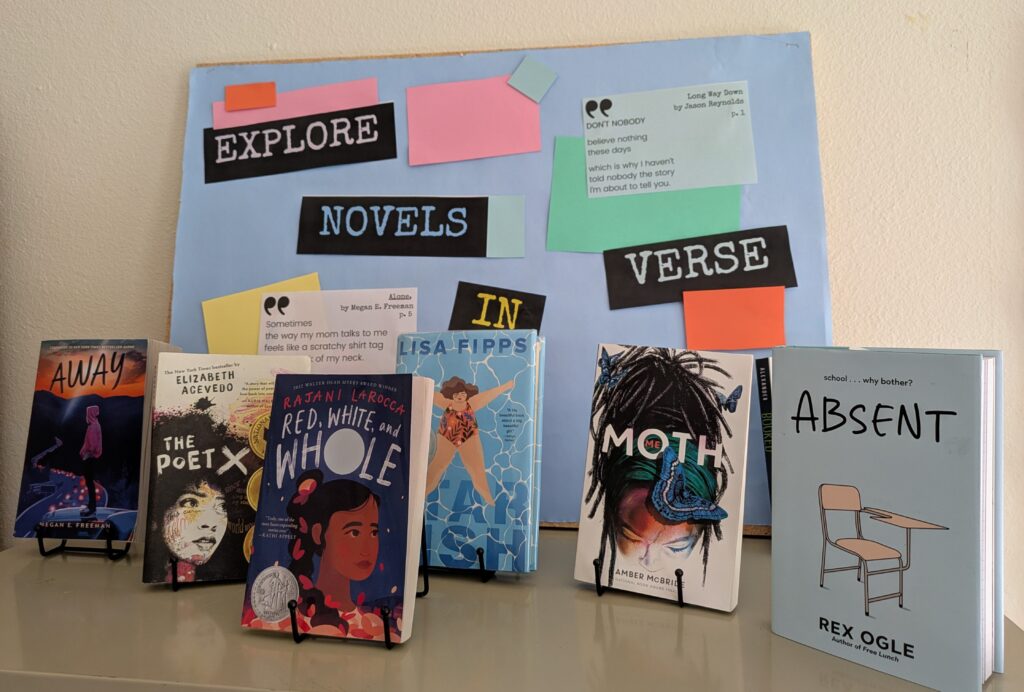
We’ve already talked on this podcast about verse novel book clubs, with Caitlin Lore. So that’s one way to put titles like these to use. They might also be great ace-in-the-holes for you in your choice reading program, to help students find on-ramps to reading. Poetry units could lead to verse novel units, and vis versa, because they share so many commonalities. I’m about to move from a verse novel into a spoken word unit, and I absolutely feel our exploration of Long Way Down has set us up for success.
My goal today is not to tell you how to use these verse novels, each wonderful in their own way, but rather to tell you ABOUT these verse novels, so you can use them however you wish. Ooh, and quick note. Of the ones I’m talking about today, most I’d call middle grade with likely appeal all the way up to 9th for many kids, and Long Way Down falling more in the 9th/10th range. As always, though, you know your students and community best.
Novel-in-Verse #1: Shook, by Julian Randall
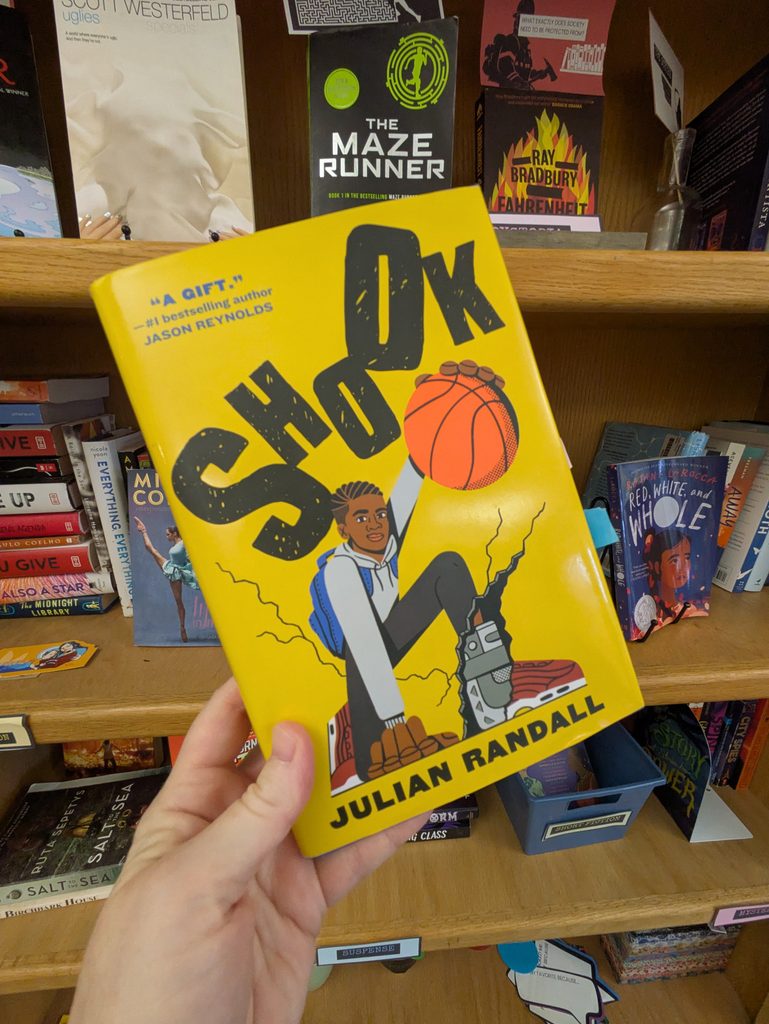
A new novel-in-verse that Jason Reynolds calls “A Gift” and is a National Book Award Finalist AND has a sports hook AND deals with mental health AND has some of the most amazing and funny similes to use as mentors for that craft move? YES PLEASE!
This short read features Malik Page, an 8th grade basketball star who faces a major injury (early) at the end of a championship game.
Many important themes come up – struggling with anxiety/panic and getting help from a therapist, family, and friends, dealing with financial insecurity and the pressure that creates, supporting his best friend who comes out to him, healing a rift with friends on his team after they start a separate group chat, and more.
Ultimately, it’s a hopeful, kind, funny, beautiful book.
Novel-in-Verse #2: Long Way Down, by Jason Reynolds
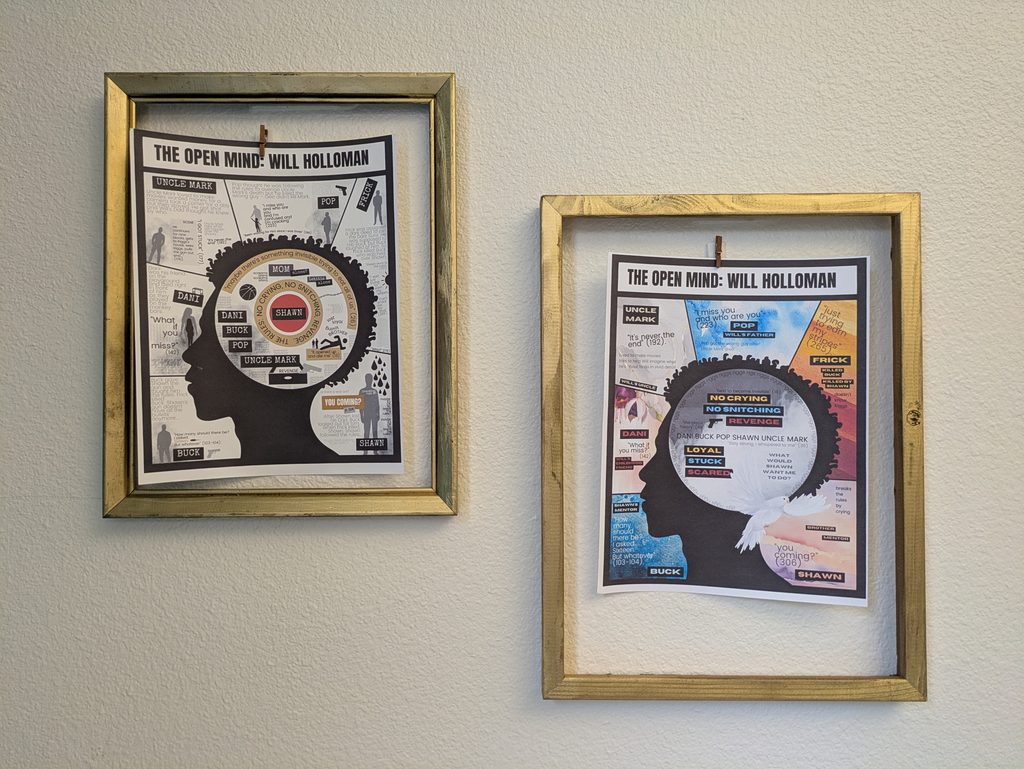
If you’ve been here long, you know how much I love this reader-maker of a book. I’ve been so pleased to see my class get into it. None of them had ever read a novel-in-verse, or even heard of the genre, until this year. In case you don’t know it yet, in Long Way Down, Will Holloman, a teenage boy in the grip of a cycle of gun violence, must decide what to do after his brother Shawn is shot. He’s learned all his life to follow the rules of the neighborhood – no crying, no snitching, and get revenge. But as he rides the elevator down through his building, a different ghost gets on at each floor to challenge and ultimately, crack, his belief in the rules.
Reynolds’ structural choices hit just as hard as his thematic ones. He wields line breaks, repetition, juxtaposition, metaphor, simile, page space, even page color with so much intention. This book is a fabulous vehicle for discussing poetic structure and reviewing/teaching craft moves. And in classroom after classroom that I hear about, it’s one of the first books students have read all of in a very long time.
If you want to dig deeper into ideas for teaching this book, check out this post.
Novel-in-Verse #3: Red, White, and Whole, by Rajani LaRocca
I found this book lovely in its exploration of existing in the space where two cultures cross over. Rajani LaRocca’s protagonist, Reha, is gentle, kind, and thoughtful. She deals with responsibility, challenge, tiny manifestations of rebellion, and even her mother’s death, without any wild disruption to the form on the page. Much of the time, I read the poems easily as if they were narrative, speeding down the pages to inhale the story. But the complexity came in the way the individual poems that made up the whole story roved between Reha’s thoughts about who she is, her memories, her description of different aspects of her life, and a present-day story.
At the start of the book, it was more like looking at a gallery of her life on the wall, where you could almost choose any order in which to wander and take it all on. Poems about her experience of twin cultures (“Two”), her memories (“First Memory”), her home (“Our Home”), and the meaning of her name (“The Star”) slide along, filling in more and more information about her without any kind of continuous narrative. So while I have found other verse novels more compelling in the way they used structure to convey meaning, I found LaRocca’s quite intriguing for the way she layered together her character with interlocking verse snapshots.
Novel-in-Verse #4: Alone, by Meghan Freeman
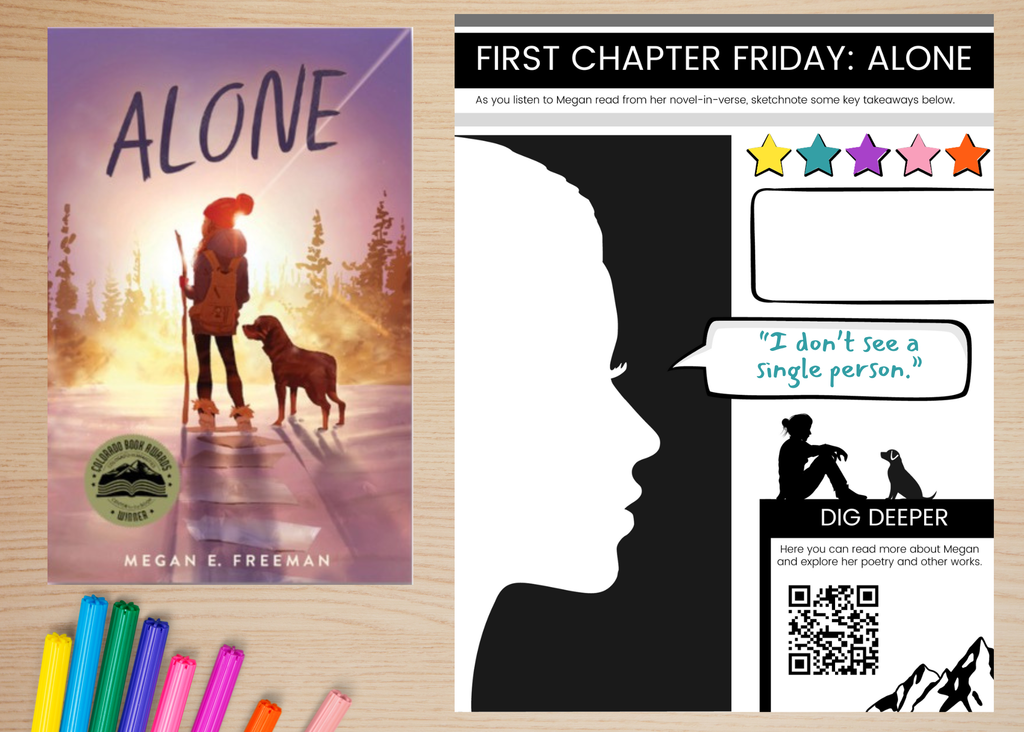
Meghan Freeman’s dystopian verse novel, Alone, provides an incredible hook. Where did everyone go? When the protagonist wakes up one morning, she finds her friends and family disappeared in the night, evacuated she knows not where, she knows not why. In the ensuing pages, she lives her life alone in her city. Readers can hardly help but imagine what it would be like to walk into a store with no one there. To bike past house after house, knowing you could go inside every single one. To figure out what to eat, what to do, what to think, what to try, in a world where you’re alone.
Pssst. Tune in to hear Megan Freeman read from this book on our First Chapter Friday feature episode right here.
Novel-in-Verse #5: Starfish, by Lisa Fipps
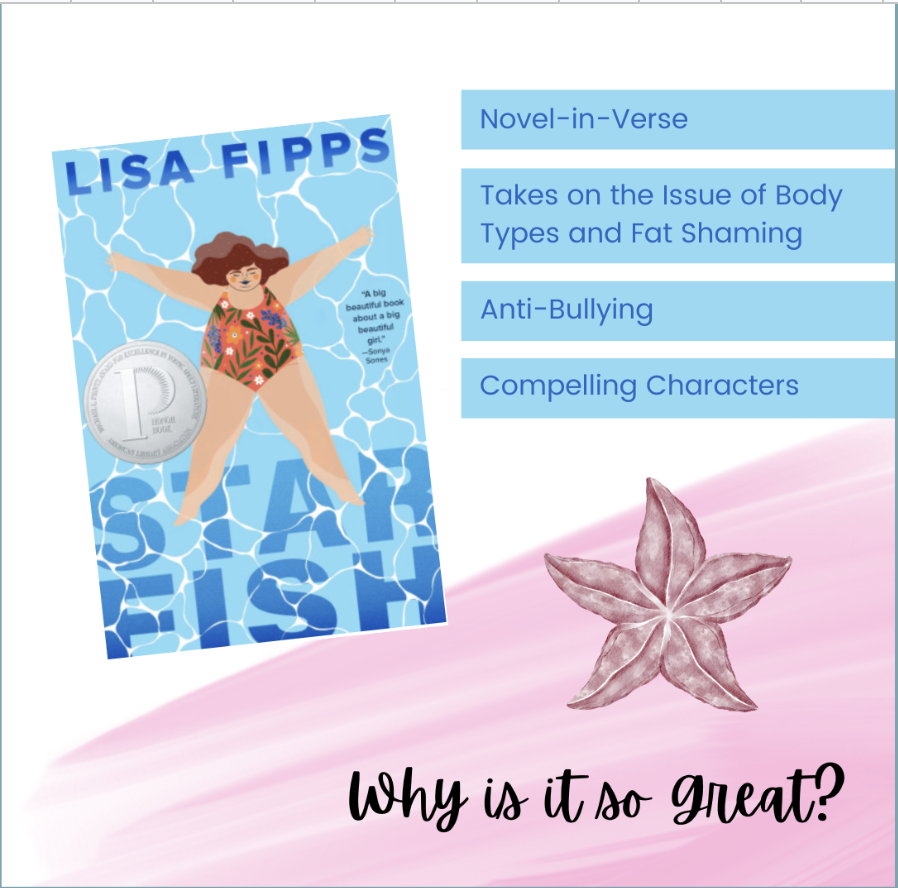
Ever find a book that keeps you up way past your bedtime? That was me with Starfish by Lisa Fipps.
It’s a novel-in-verse that talks about body positivity through the eyes of Ellie, a middle schooler navigating the rough waters of self-acceptance amidst bullying. Ellie’s journey from feeling cornered by others’ opinions to standing tall in her own skin is both inspiring and a critical conversation starter. Fipps discloses at the end (spoiler alert!) that as a child she experienced all of the same bullying attacks that her main character did, adding even more weight to the issues shared in this fictional text.
Novel-in-Verse #6: Absent, by Rex Ogle
I read Absent this fall on the recommendation of my friend Susan, of the Wonder World Book Cafe Podcast, who has been on this pod before with great book recommendations. She told me her students were loving it, so I ordered it immediately, just like I did when she suggested I read Ogle’s Free Lunch. As usual, she was right!
The really intriguing thing, for me, in this book, is that it’s told through three different narrators in three different forms: verse, more traditional prose (though in diary format) and graphic novel. As each narrator takes their turn to share their perspective, the form switches. Kids who love one of these forms can stay in their comfort zone while also being pushed just a little to branch out.
The three boys in the book each miss school for very different reasons, each under strain and pressure from different external factors. With so many narrators to choose from, each dealing with different things, students are three times as likely to find a point of connection as well as an expansion of their horizons. I love that.
Sources:
“How poetry can help kids turn a fear of literature into love.” (2017.) [Youtube Video.] PBS News Hour. https://www.youtube.com/watch?v=FsQNaSLziGI