
Discussion can be a huge win or a dudsplosion. When kids are prepared, the set-up is solid, and the conversation is humming, it’s so energizing! When you’re standing at the front with desperation in your eyes and the same two kids have their hands in the air again, it’s like wading through congealed lime jello in a snowsuit.
So what can you do to make sure you’re always in the huge win category, and not picking lime jello out from between your (metaphorical) toes? Today on the pod, we’re taking a look at the one scenario to avoid as much as possible, and a gallery of options that can help you do better.
The Problematic Model to Avoid: “I.R.E.”
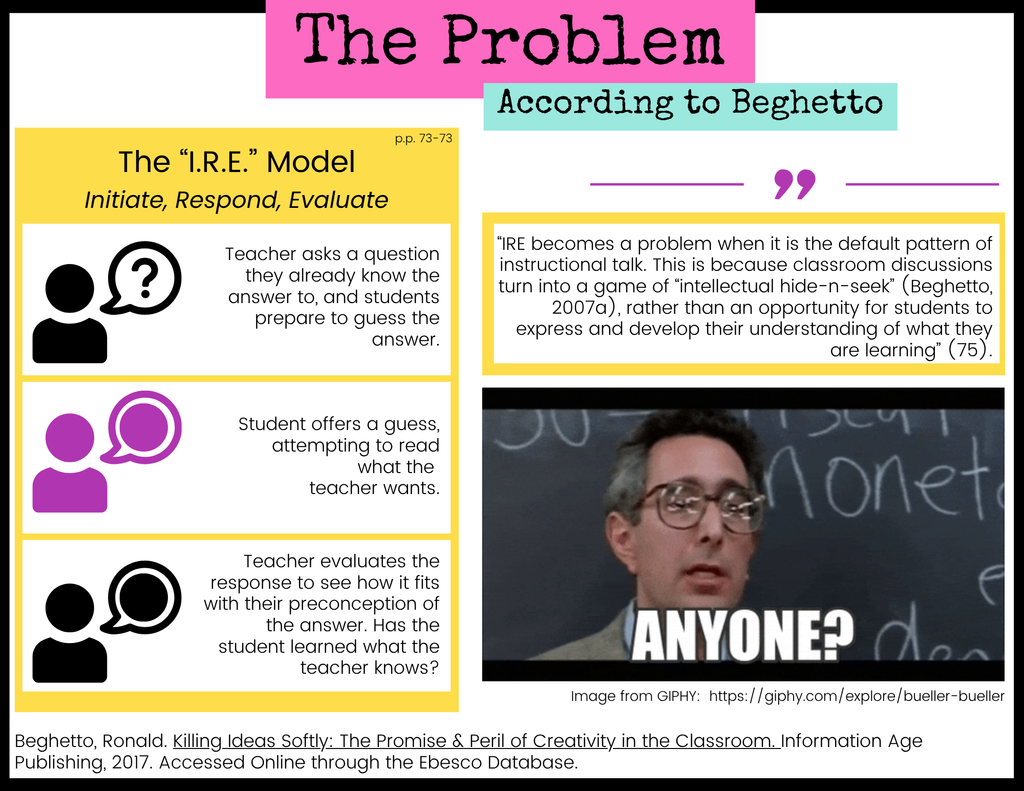
As aware as I am of the dangers of the “I.R.E.” model, which Ronald Beghetto walks through in his book, Killing Ideas Softly, I still fall into the trap now and then. I think most teachers do. “I.R.E.” stands for “initiate, respond, evaluate.” It’s when you stand at the front and ask a question looking for a specific answer. The kids know they’re trying to guess what you want, and a few of them are willing to try. You call on one and they answer, then you accept and elaborate on their point to affirm that it’s what you were thinking, or you correct them with the “real” answer.
Convenient as this model seems, it’s pretty much the death of independent thought. Not to be overdramatic. But did I mention that Beghetto’s book is called Killing Ideas Softly? So really, he started it with the drama!
So how can you avoid the well-worn rut toward the trap of “I.R.E.”? Let’s go.
Alternatives to “I.R.E.”: Let’s Gallery Walk other options for Discussion

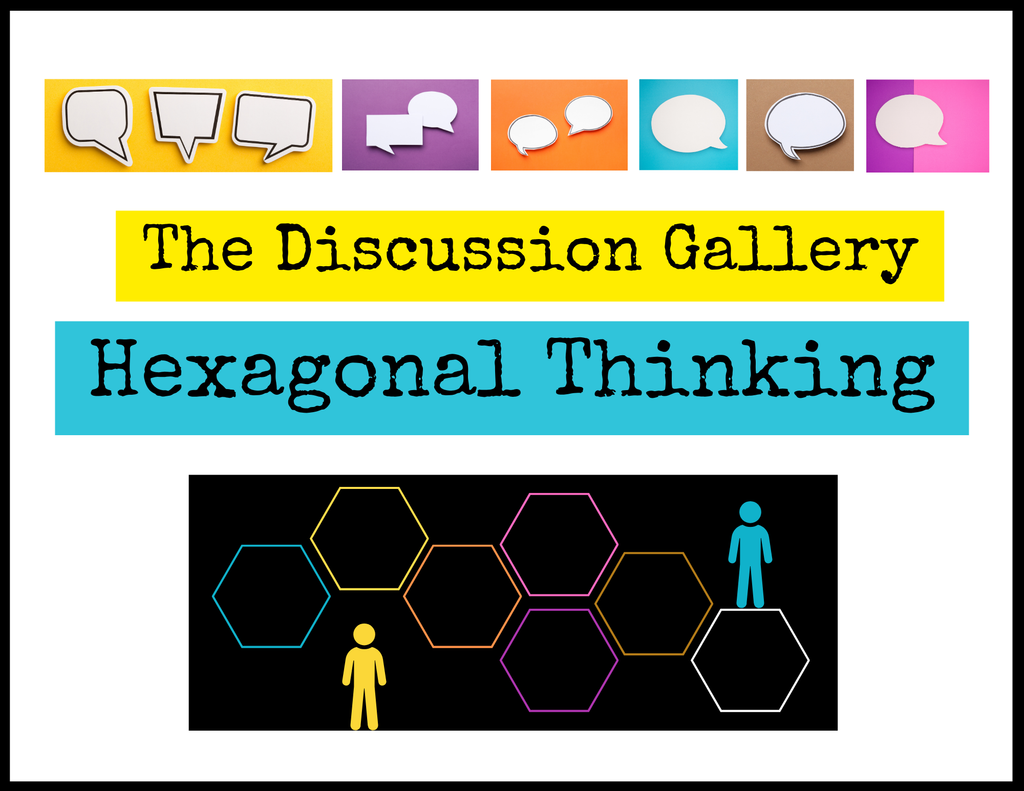
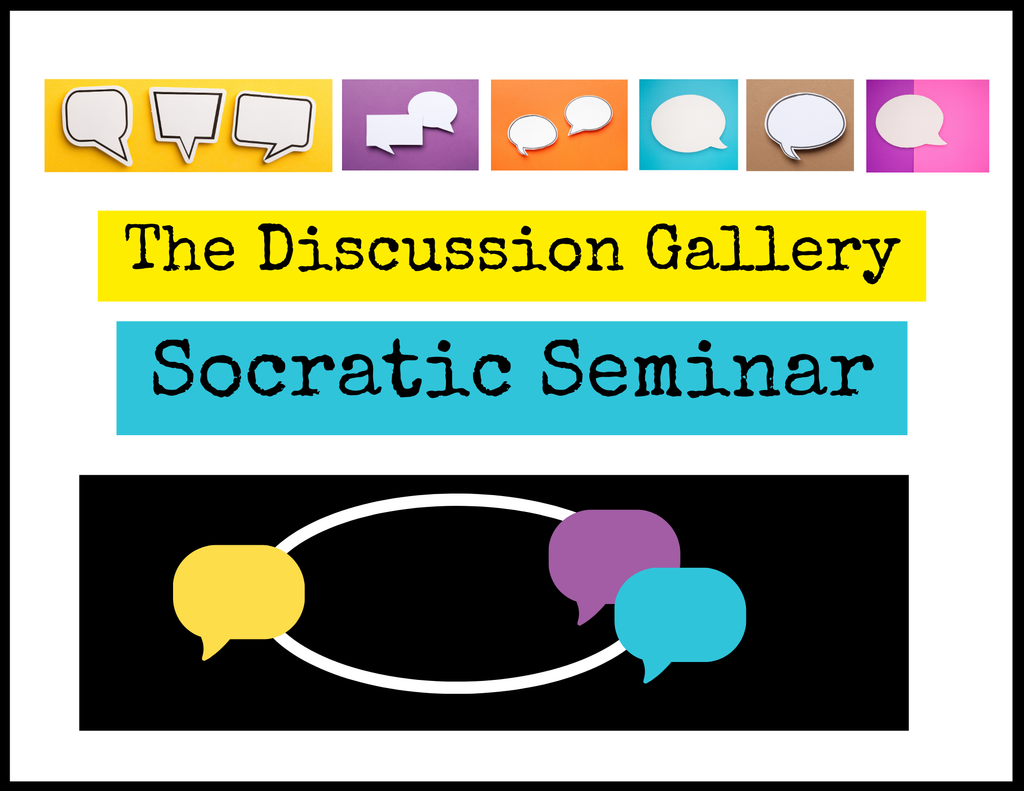

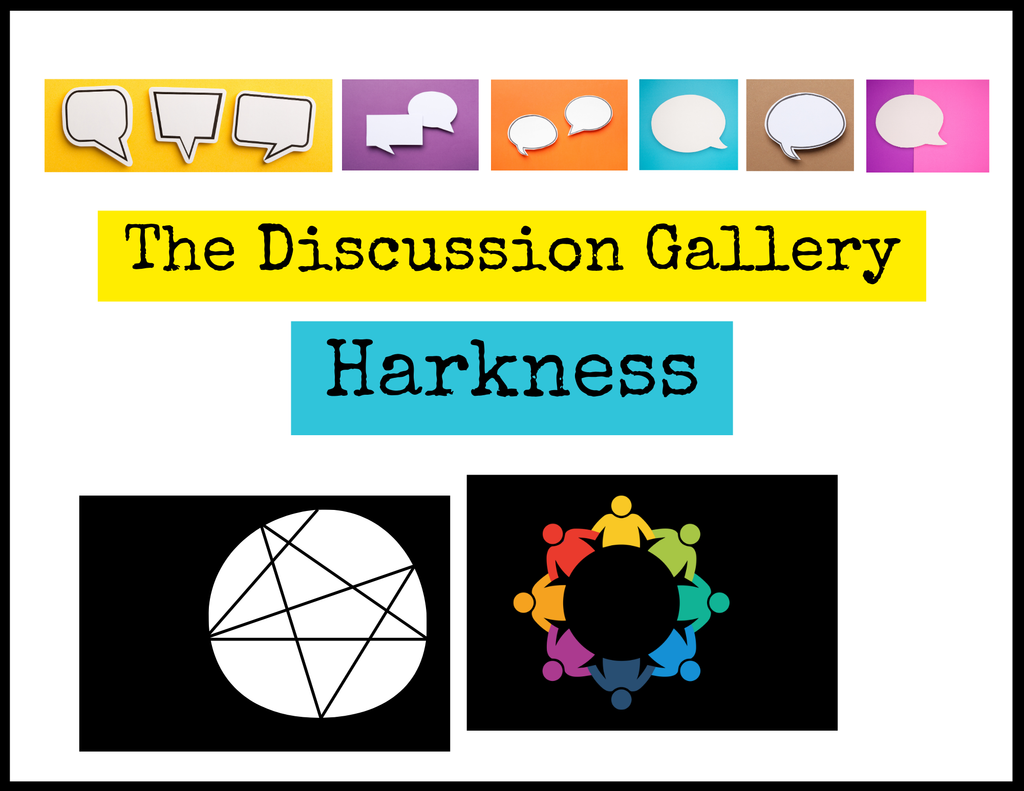
Let’s have a wander through a gallery of other options. Instead of standing at the front in search of answers you already know, you can center student voices with club-based discussion, hexagonal thinking, Socratic Seminar, speed debate, Harkness, or silent discussion. Each pretty much removes you from the equation, meaning “right” answers are off the table and critical thinking to come up with ideas, defend them, and debate them are the project of the day.
Discussion Gallery Spotlight: Clubs
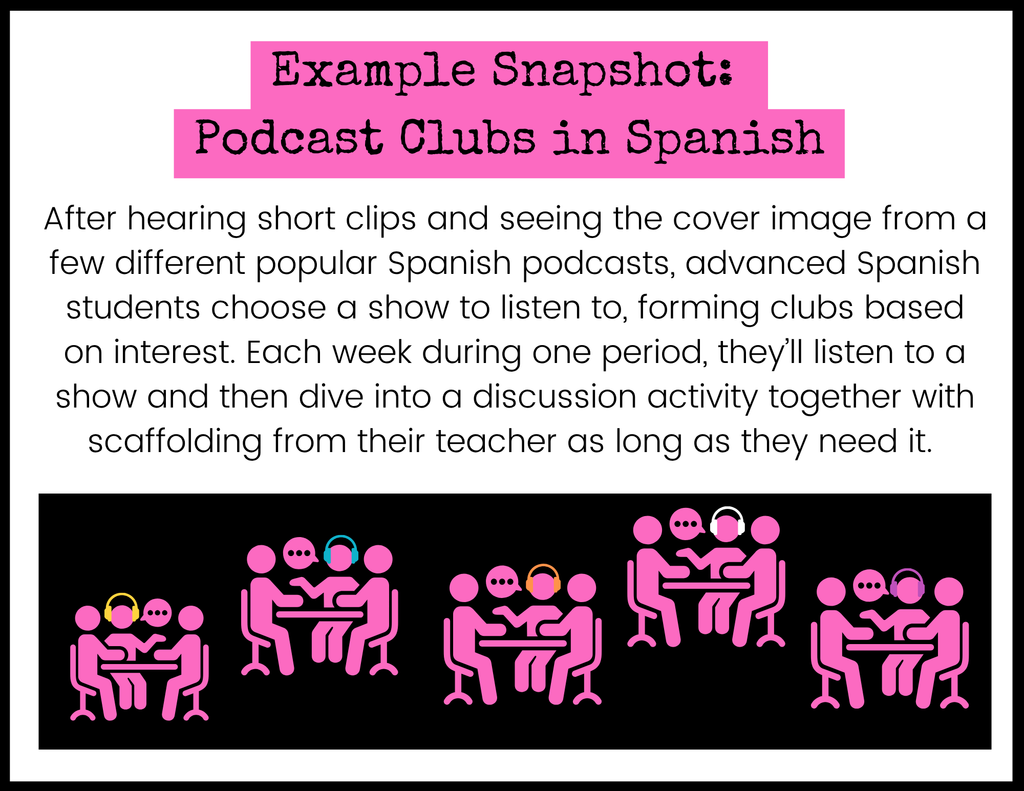
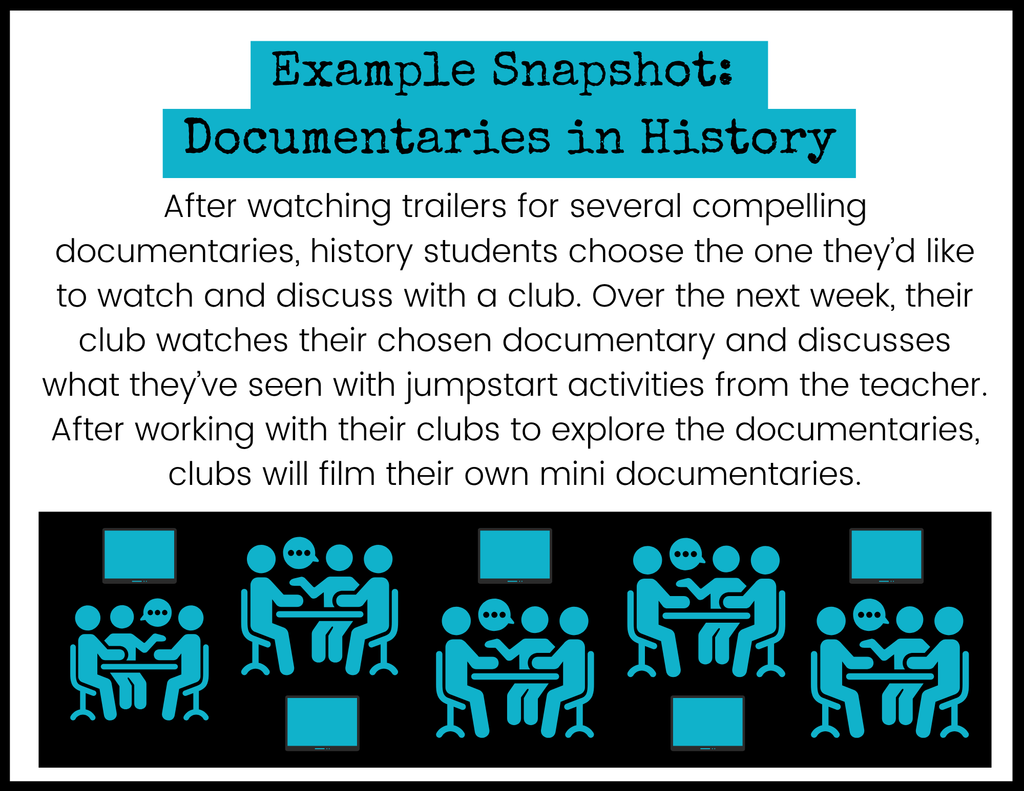
So let’s start with clubs. Clubs are all about giving students agency over their text selection. That could look like they choose what book to read, what poet to study, what documentary to watch, what podcast to listen to, etc. You get the idea. Book clubs are the most common, and tend to last several weeks. But they aren’t the end all be all of clubs. You could have two-day clubs focused on Ted Talks. Three-day clubs focused on different True Crime podcasts.
Inside clubs, students set their schedule (you can help as much as you think they need), discuss the text (you can provide scaffolds at the level that’s right for your kids), and do related activities set up by you. But THEY drive the conversation, because you aren’t there. Sure, you might stop by to listen, but you’ll be visiting all the clubs. They can’t look to you for the “right” answer, so the responsibility for thinking lies with them. No “I.R.E.” to be found.
Discussion Gallery Spotlight: Silent Discussion
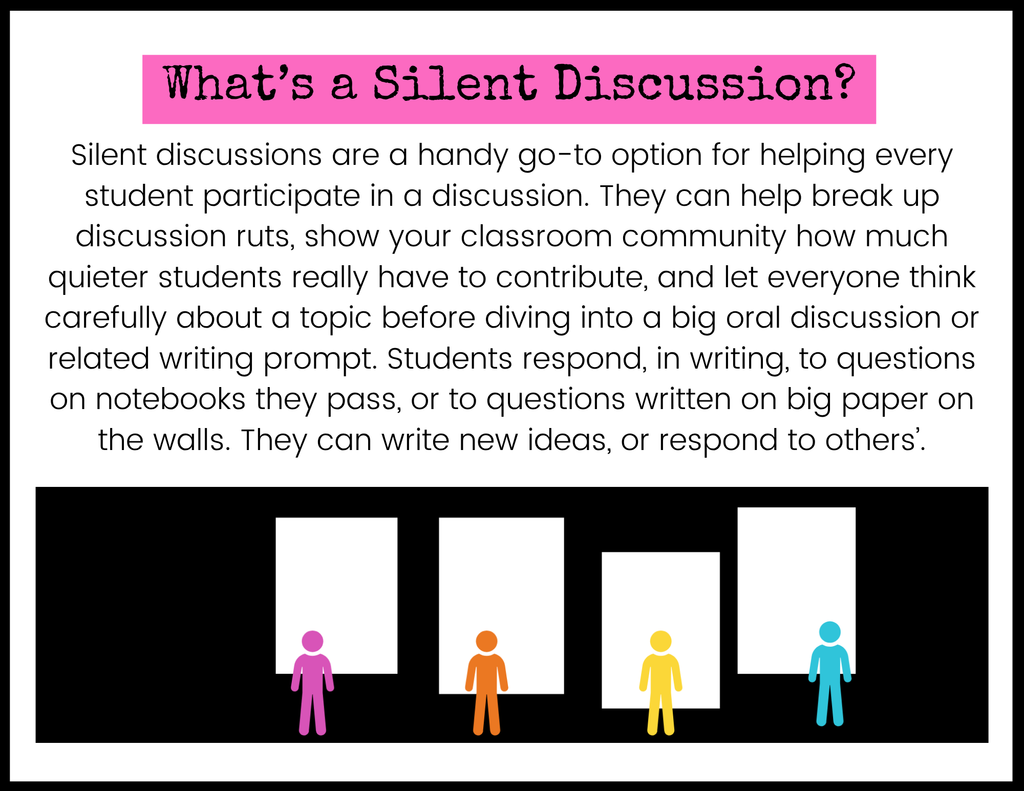
In a silent discussion, students are sharing their responses in writing to questions that you or they generate (or a combo). Because different discussions are happening all over the room, you can’t possibly lead them all. You can choose to participate, adding thoughts here and there or responding to students comments or questions with your own insights, but you’ll be one written voice among many, and you can take care not to frame your input in such a way as it feels like the one single right answer to the question. You might even want to focus on highlighting interesting points from others and asking follow-up questions if you participate, rather than providing anything that could feel like the deciding answer.
Discussion Gallery Spotlight: Harkness™ Discussions
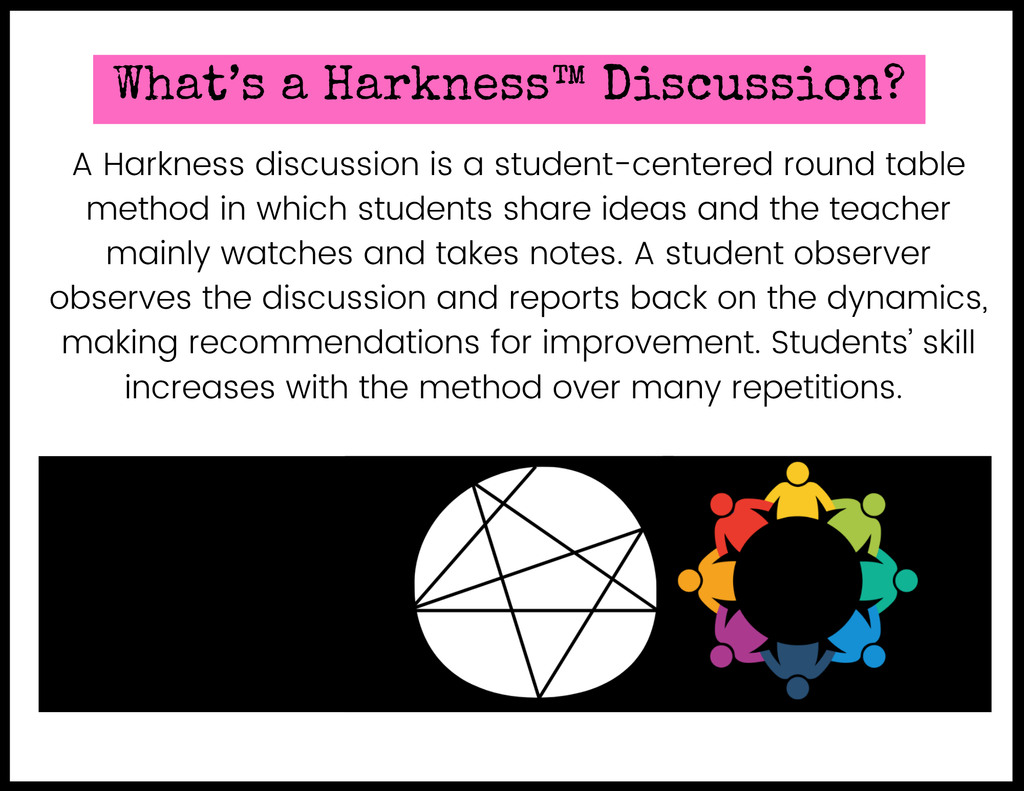
Harkness discussions take you fully out of the conversation (though the impulse to jump in and rescue the discussion when kids are struggling is REAL) as students sit in a circle and discuss whatever is on the table. Your role here is to set them up for success by trying to make sure they’ve read/watched/listened to what’s being discussed and prepared to dive in with some kind of warm-up. A student observer tracks the discussion and reports back at the end with what they noticed (not using names) and a piece of key advice for improvement. This method, one that I love, is something that both you and your students will get better at with time and effort. It seems simple, but there’s actually quite a learning curve.
Discussion Gallery Spotlight: Speed Debate
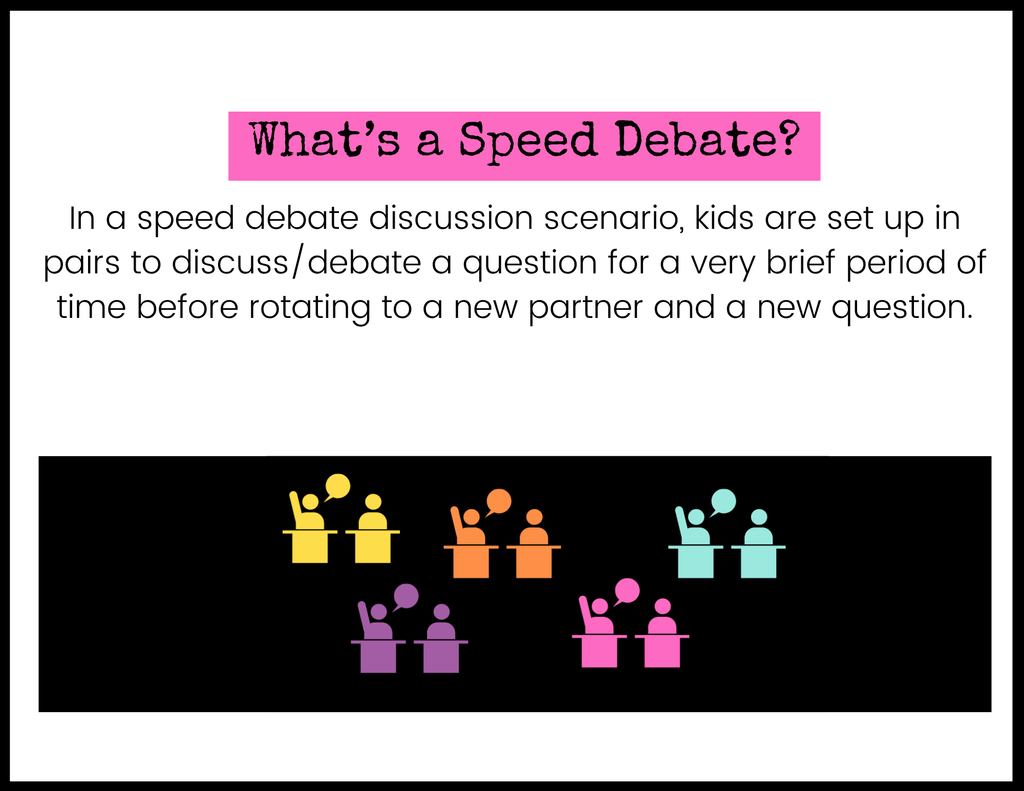
I always love seeing photos and hearing stories of speed debate set-ups in classrooms. You line up the desks or tables so that kids can sit across from one partner. Then you provide questions or topics to debate/discuss. These can be different at every spot, or you can pop them up on a slide at the front and change them at each rotation. You can ask everyone on one side to take a certain position and everyone on the other to take the opposite, or you can let kids choose who will argue for what. You can use this to practice a certain skill, like coming up with a thesis statement and providing a piece of evidence, or you can use it to dig deep into big questions from your unit. You could even use it to tap interest and background knowledge before a unit.
For example, before reading Romeo and Juliet, you might have a speed debate with questions like: Do you believe in Love at First Sight? How old do YOU think someone should be before getting married? Should parents ever tell their child they shouldn’t date a specific person? I can imagine some pretty engaging debates on topics like these! And of course, student voices would be at the center. With a dozen or so debates going on all over the room, no one can look to you for answers.
I learned about speed debate after I stepped away from classroom teaching, but now that I’m back in the game, I’m looking for my opportunity to give this method a try soon. In the mean time, I’m recommending it based on the great things I hear from others.
Discussion Gallery Spotlight: Socratic Seminar
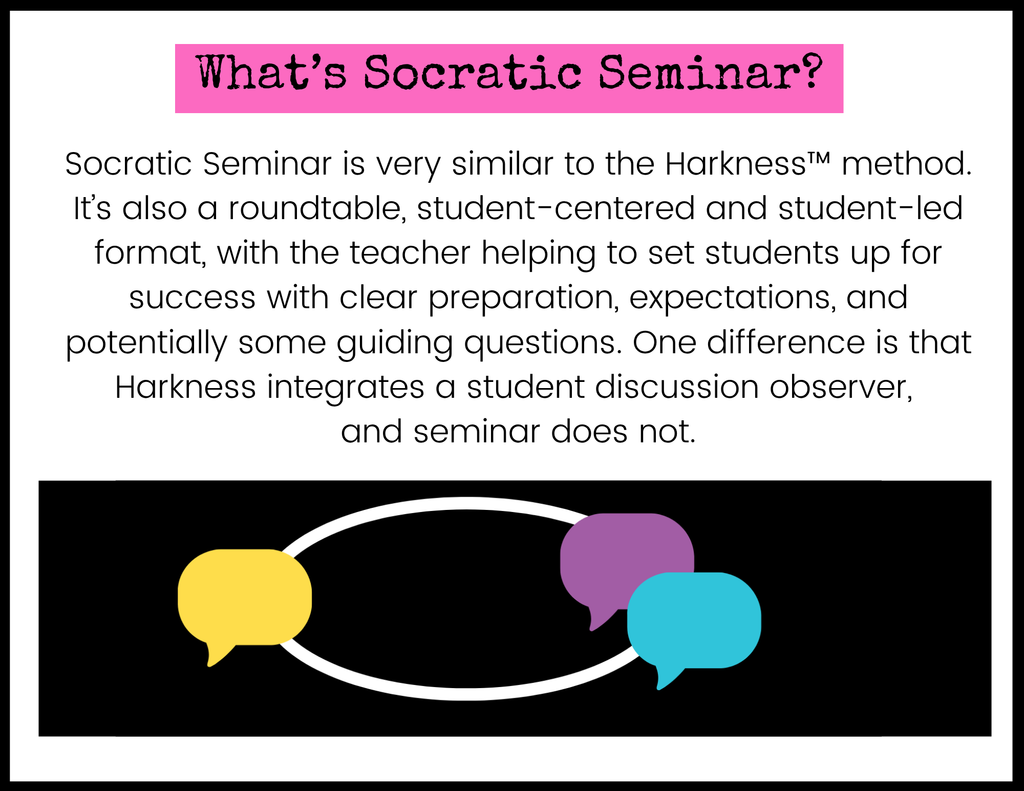
Socratic Seminar is quite similar to Harkness, with perhaps a bit more structure in the set-up but a similar student-centered circle-based method. Perhaps the biggest difference is that Harkness has a student observer chart and report on the discussion, and Socratic does not. If you’d like to dig deeper into the nuances and possibilities of this method, check out my interview with Amanda Beal, Teaching Conversation in a Polarized World with Socratic Seminar, or this helpful video from John Spencer.
Discussion Gallery Spotlight: Hexagonal Thinking

You won’t have to worry about silence in the room or students looking to you for answers when you launch hexagonal thinking, originally invented by systems thinker Anthony Hodgson. Students will be too busy debating the possibilities in a method that simply discounts the possibility of a “right” answer. Hexagonal thinking centers student voices and idea development, not the quest for being correct. There’s no possibility of falling into the trap of “I.R.E.” with this vehicle for conversation.
Go Deeper
Want to go deeper with discussion? Tune into the Discussion Playlist of past podcasts on discussion here, or grab my free discussion toolkit with discussion warm-ups, hexagonal thinking templates, and more.