“Do you think group work skills are important out in the world?” my student asked me. We were walking around, interviewing each other about our prior experiences with group work – the good, the bad, the ugly. I thought about what he was asking, and about my life and work now.
“Yeah, I do,” I said. “Right now I’m writing a book, and you’d think that would be pretty solo, right? But actually I’m working with teachers all over the world who are sharing their stories for the book. And I talk over ideas with my editor and my agent. And in my work at this school, I go to faculty meetings and we work together. And even in this class, it’s kind of like we’re one big group. I want to know what you all think about things.”
He jotted down my answers, gave me his, and moved on to his next interview partner, as I reflected on just how much I think my students need collaborative skills for the lives ahead of them.
When I was in school, no one ever taught me how to do group work. Or share the floor in discussion. I had no idea what made group work go well, I just knew that it never did.
Recently, as my students embarked on a massive group PBL task, I wanted to set the stage by talking about an elephant in any room involving collaboration: How do we even do group work? I tapped some helpful resources in The Lighthouse, and I was really happy with how it all went down. So let me walk you through it.
The Preamble: Partner Work Red Flags
Over the first few weeks of school, I noticed that only a few of my students seemed comfortable with the classic partner turn-and-share. Every time I asked for a quick chat between partners, or for partners to discuss their work on a brief activity together, a few kids in the class would start discussing, and the rest would silently complete their partner activity near their partner, without even speaking. Reminders did little, unless I actually stood between the pair and facilitated a conversation back and forth. It was clear partner work just didn’t feel very comfortable, unless kids happened to be sitting with a close friend, something my seating chart made unlikely.
So, knowing that the small groups I was about to launch were going to work together for weeks, I wanted to be sure we didn’t start with silent awkwardness. I got the ball rolling by saying I had been part of a lot of VERY confusing, difficult, badly distributed group projects, and I wanted to help them avoid having my experience. A quick poll showed us that we had all had similar experiences.
Generating Ideas and Identifying Relevance: Mini-Interview Series
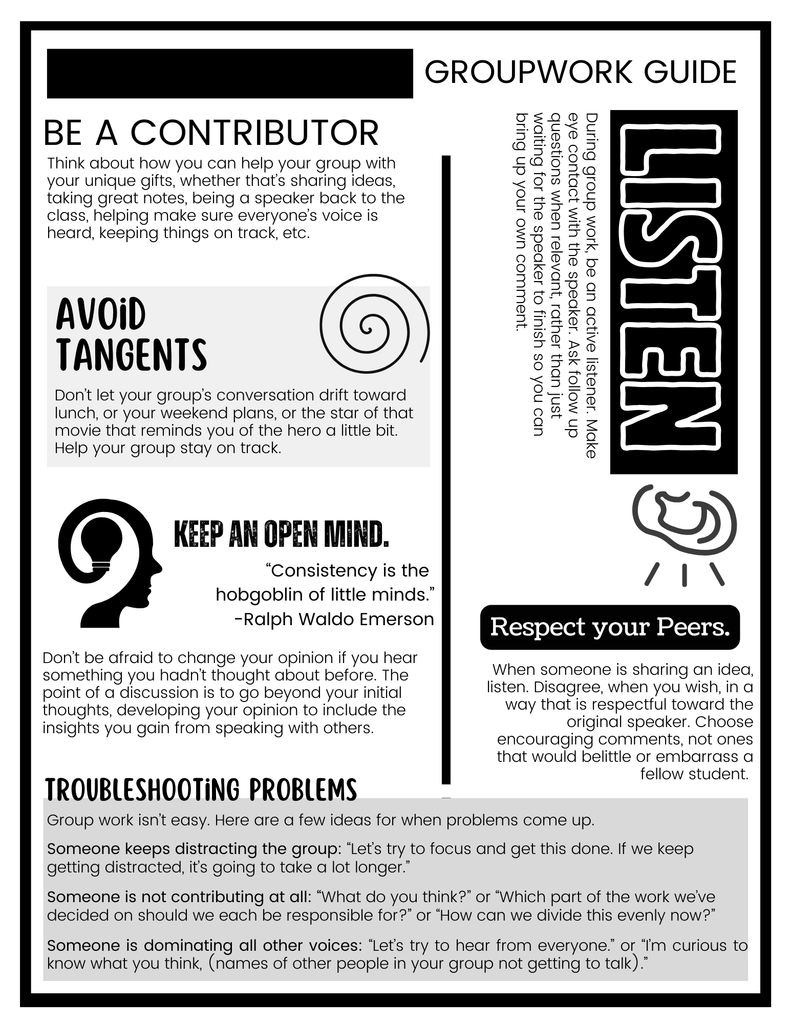
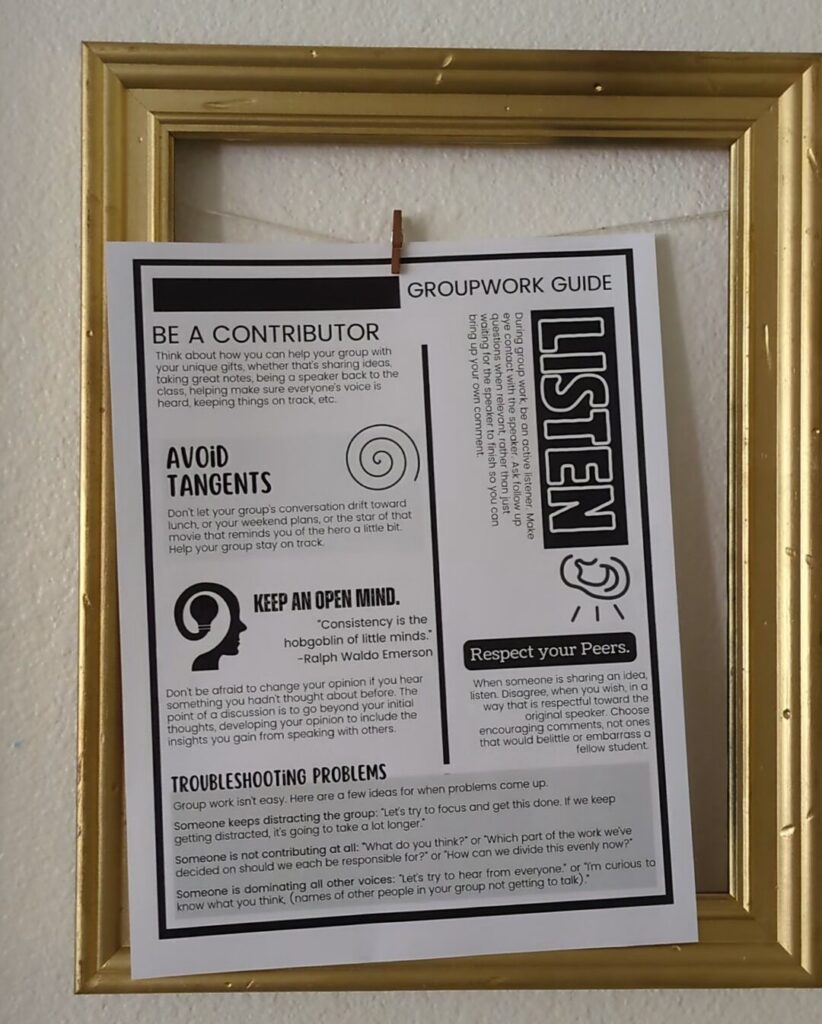
I passed out a double-sided handout. On one side was a “Group Work Guide,” with some foundational concepts from me. After all, I’ve learned a bit at this point, and I’m cool with sharing that. They don’t have to figure it all out on their own.
But the real nut of the activity was not reading my tips (easily forgotten) but talking to each other about what works and doesn’t in their lives. So then I had them flip over their paper to an activity guiding them through mini-interviews with each other. Their goal would be to talk to five different people in the room to get their thoughts on group work, guided by the questions for each chat. Not only did the interviews ask them to discuss their past experiences and best practices, it also asked them to consider how/why group work might matter in their future in the working world, situating this effort to build group work skills not only as helpful prep for ELA, but for their entire future (yeah, it’s not being dramatic, it’s really true).
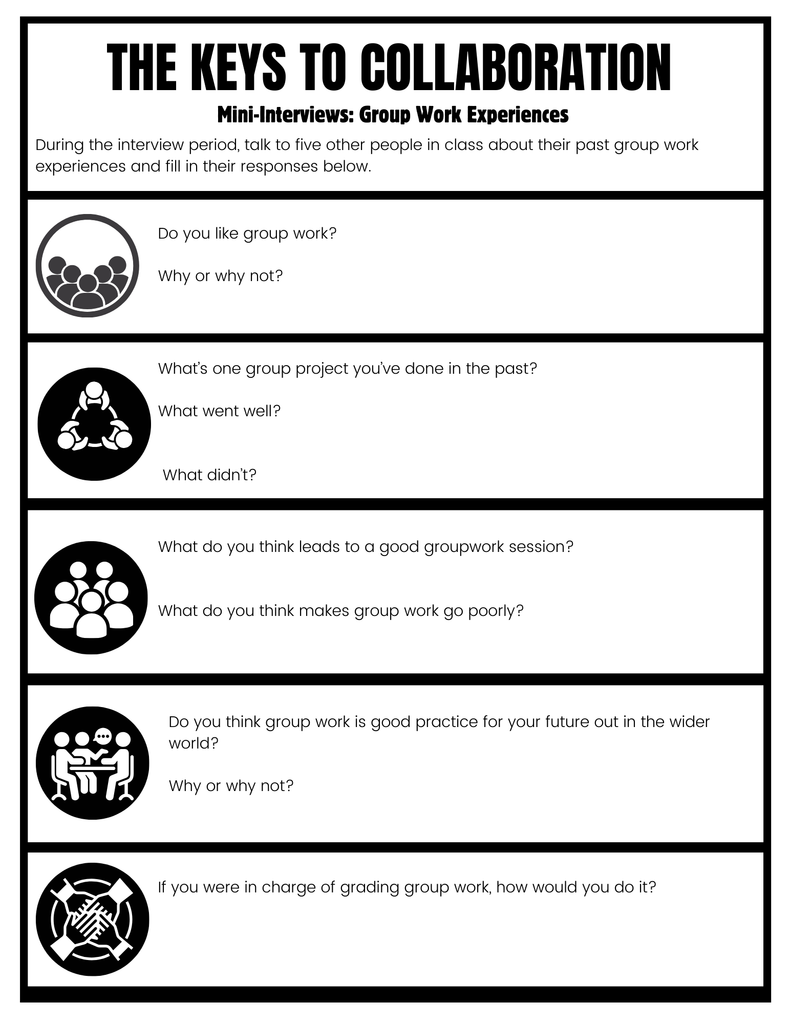
I joined in with the conversations. We had an odd number of kids, so without me, someone would always lack a partner. I’m not a big fan of groups of three in situations like this, it wonks up the back-and-forth nature of a quick interview chat.
Honestly, I was even happier with this activity than I expected to be. Kids seemed glad to be up on their feet and talking to partners, getting to share their thoughts around their own personal experiences and give their opinions on a format that they don’t always have control over at school. Everywhere I went in the room, I heard on-task conversations.
The Takeaway
Once most kids were done, we sat back down to figure out our takeaways. As kids shared their views on what does and (really) doesn’t work in group work, I made a mini-anchor chart to put up in the room next to the one we made back in August about whole class discussion.
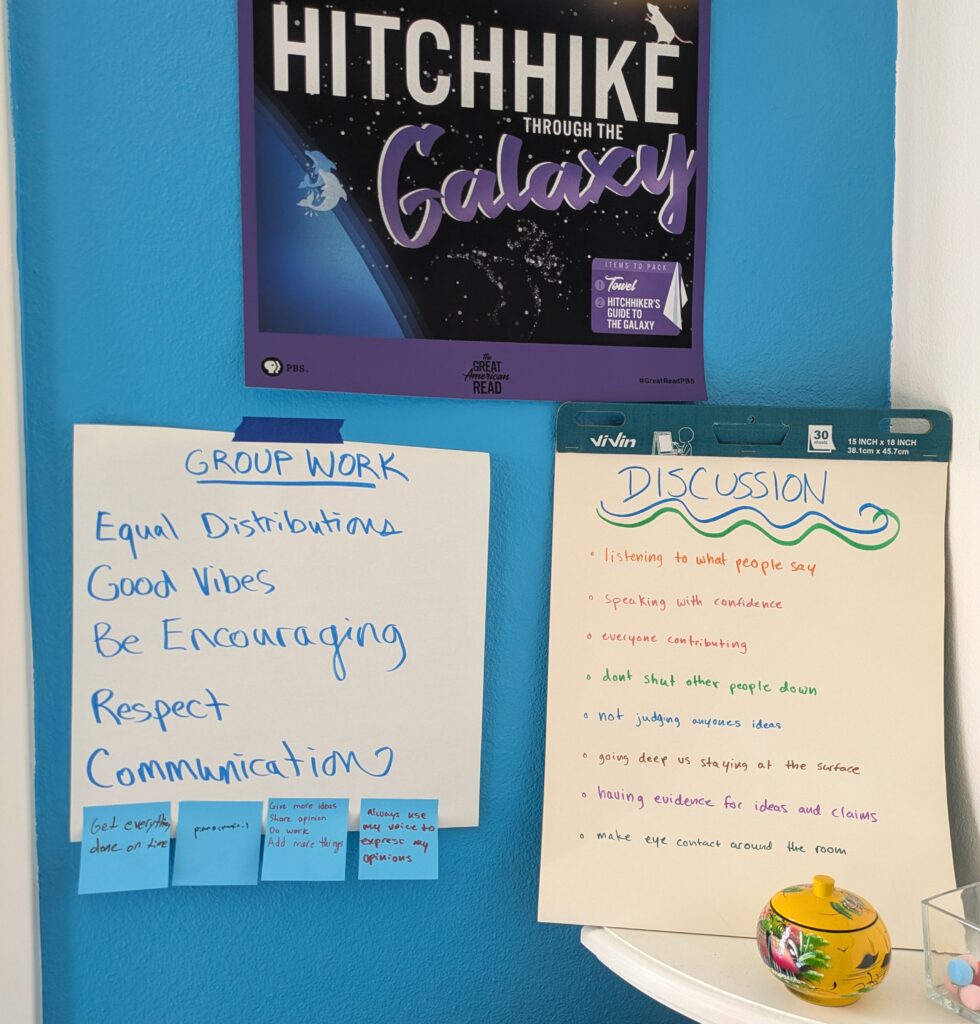
I also clipped the guide I gave out inside one of our wall frames, at least temporarily, so that it’s another quick reminder of helpful norms.
And That was That
From there, we transitioned easily into our first small group meetings for our new PBL project, and I was extremely pleased by what I saw around the room. Across the groups, I saw kids talking, typing, brainstorming, debating, and digging into our book to explain their ideas with text. I didn’t see anyone drift into the next tab over and get distracted (something we had very specifically discussed avoiding) or zone out and ignore their group. It was lovely!
This activity only took us about twenty minutes, so it was a relatively easy add to our 85 minute block in order to set up success for a three week project. I expect to refer back to the norms we came up with together routinely, and I hope to see kids refer to them with each other too. We now have a common vocabulary for this structure, something I certainly lacked as a student and could really have used.