Reading comprehension questions and summaries are no one’s idea of big fun. They often feel like a game for a grade, and they don’t inspire much engagement. And yet, we do want kids to be able to look back on their reading and remember what happened. Cleary, being able to pull together a quick mental summary of a text is a useful skill for argument, conversation, research analysis, debate, and more. So how do we help kids grow the ability to look back over a text and pull what’s vital without relying on questions that feel like busywork?
For the answer, I’m turning to my favorite smoothie. I start by blending spinach and orange juice. The juice quickly turns a beautiful bright green. Then I add a half banana and a lot of frozen pineapple and mango. Once I blend it, no one can taste the spinach at all. It’s a family favorite.
So how do we turn summary skills into a green smoothie? That’s what we’re talking about on the podcast with today’s quick tip.
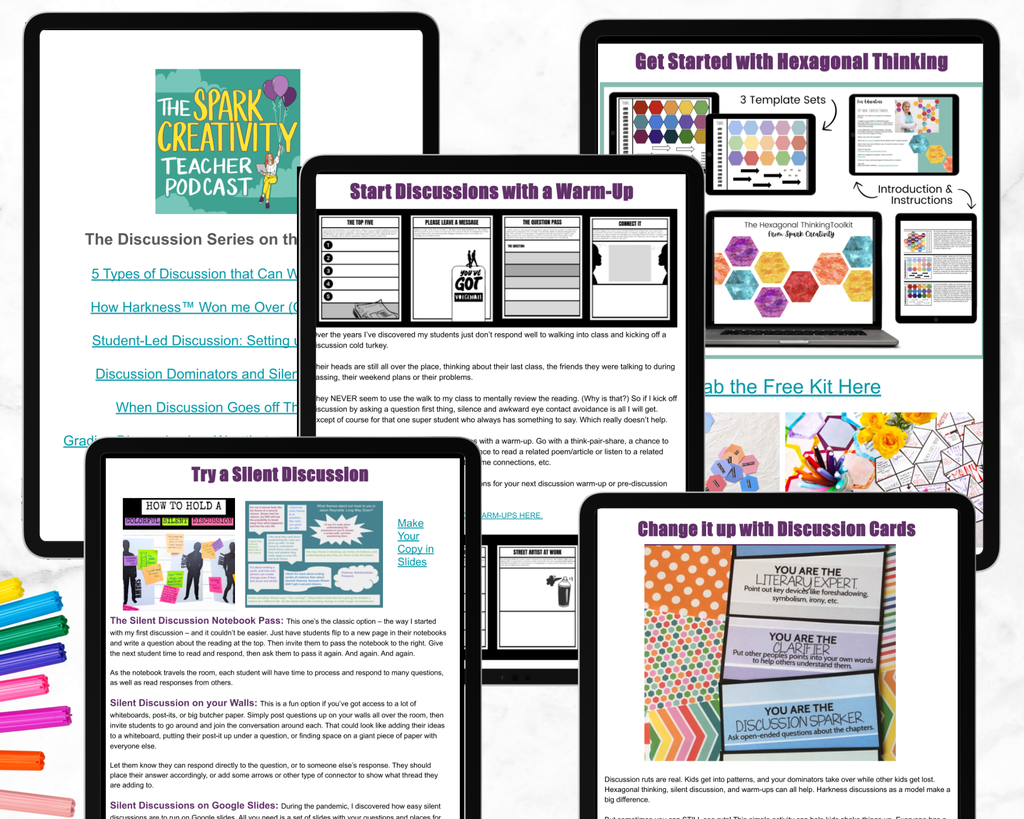
One of my favorite ways to skip comprehension questions and summaries, but achieve similar goals, is the discussion warm-up strategy. A discussion warm-up invites students to shake off whatever just happened before class, and think back to the reading to pull together what will be useful for discussion – big ideas, in-depth questions, analysis of what happened and why.
Discussion warm-ups can be different every day, but still help students to practice the skill of reviewing what they’ve read/viewed/listened to in order to prepare to go deep with it.
Let’s look at a few examples of discussion warm-ups.
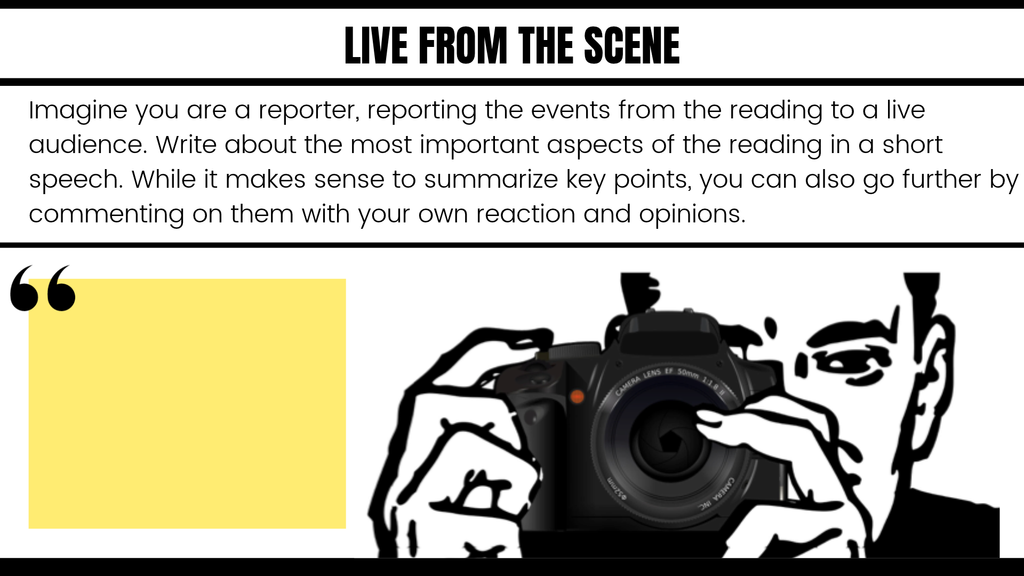
In one, students write a short script as if they are a reporter reporting live from the moment in the text where they left off reading. Obviously, if the text is the news, as a reporter they will need to summarize what happened and comment on the events.
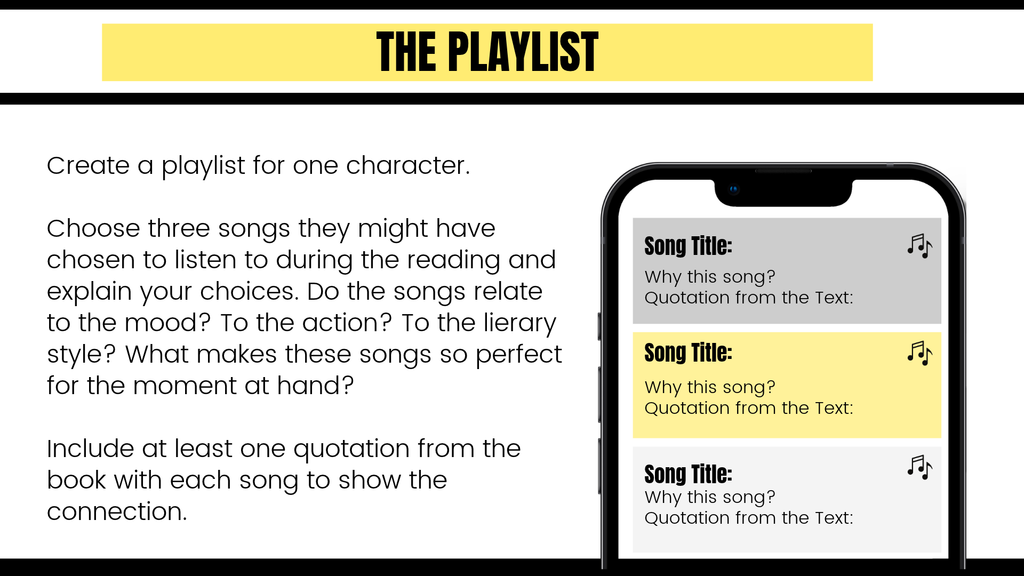
In another, students create a playlist to match the action from the text. While they need to think critically to choose songs that complement the text, first they have to to think about what happened. The songs will correspond to their mental summary of the action.
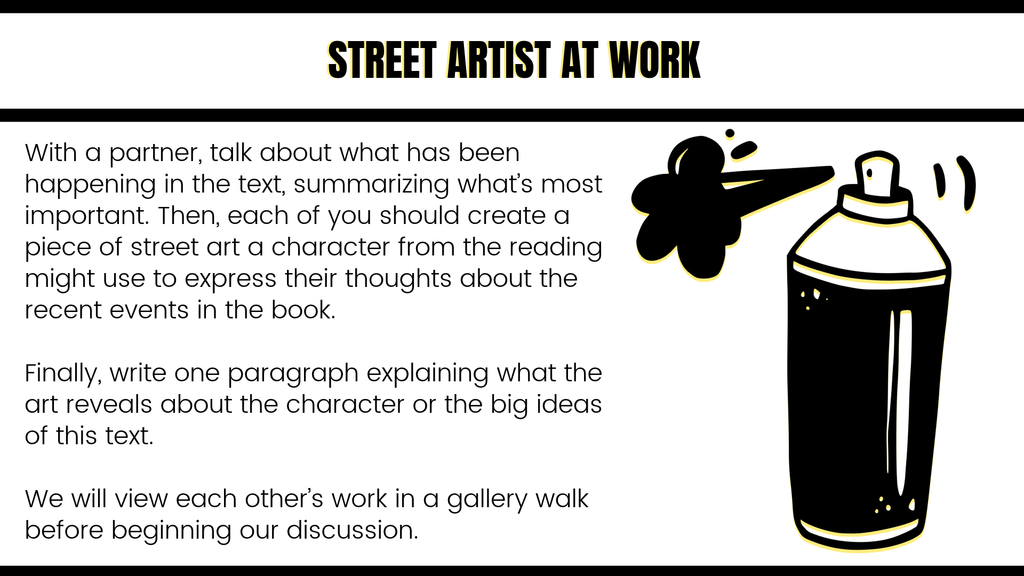
In a third, students create a design for a piece of street art a character might create in response to recent events. Once again, they’ll have to think through what’s been happening in the text in order to consider how an artist could respond.
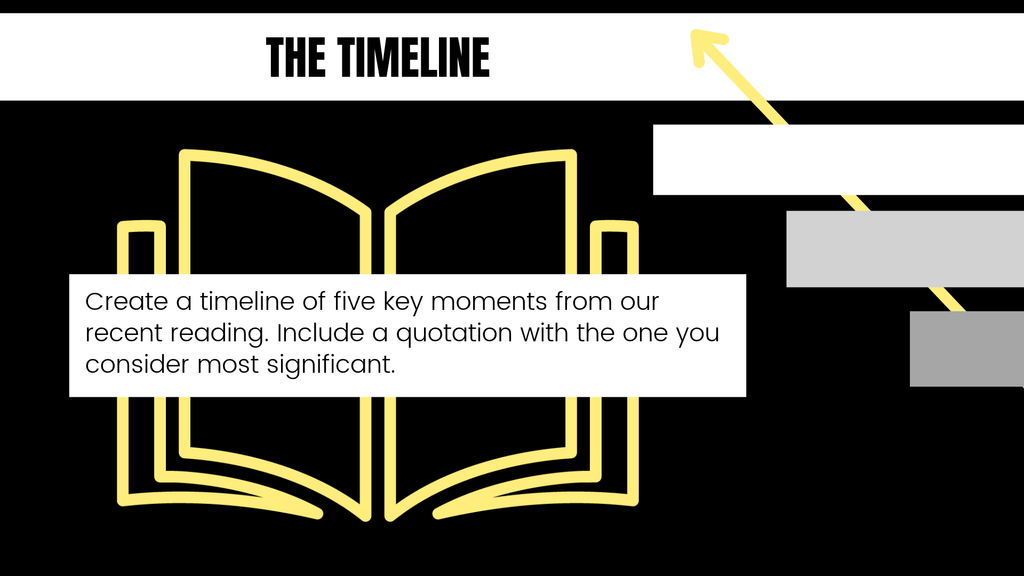
In our last quick example, students create a timeline of key moments from the recent reading, then choose the one that’s most significant.
These activities have an immediate and clear purpose – preparing for discussion, not just “proving” that a student read.
They don’t allow for help from AI or Spark Notes, since they’re done in class.
They’re framed with a more interesting prompt than mere “what happened” or “summarize the…”
Each of these brief activities, which can be done alone or with a partner and graded with a check for completion or with more depth, sets students up for success in a discussion of the text. Each also helps them practice the skill of looking back over the text and figuring out what was important. They also take that quick comprehension check further, asking students to make connections and analyze the text for a purpose beyond comprehension.
It’s a simple idea really.
Instead of “summarize last night’s reading,” you reframe the task into something with more hook, a bit more oomph on Bloom’s Taxonomy, and a clear purpose (to be prepared for a great discussion).
The summary is there. It’s the spinach at the core of this activity smoothie.
But no one really notices it since the pineapple and mango dominate the flavor combination. Students are too busy imagining scripts, discussing playlist options, and choosing the most significant moment in the reading to consider what they’re doing as a part of building comprehension skills or summarizing text.
Put it into Practice
I’ve recently updated my free discussion toolkit, which includes 15 discussion warm-ups like these, as well as help to get started with silent discussions and hexagonal thinking discussions, and a playlist of podcasts that deep dive on discussion. Find out more right here.