We’ve all had the experience of planning a detailed activity meant to take thirty or forty minutes, and then watching a student close their book or notebook after five.
It’s confusing. It feels obvious that they couldn’t have done a good job, and yet it’s often not the best use of teacher time to litigate this individually with each early finisher.
And yet, preparing a plan for what to do is tricky, because there’s not a one-size-fits-all approach to students finishing early, because it looks different in different situations.
Sometimes students finish early because they rushed, but sometimes it’s because they’re just fast and working on a different timeline than the class. Sometimes students finish two minutes early, sometimes forty-five. Sometimes students finish early just once in a unit, sometimes it’s the same kids every day.
So how do we meet the varied needs of all these early finishers? Today on the pod, let’s talk about setting up a range of options you can choose from based on the maaaaany different situations that come up.
player
Start Small: The Quick Reads Shelf
Even if you aren’t focused on choice reading right now, or don’t have a classroom library, one easy option is to provide a shelf of short works available for early finishers. If you keep these books in the room, you can check out varied short works at your school or local library to change up now and then in this area of your classroom.
The books below are just examples, not necessarily the perfect fit for your age of students and your community.
The idea is to choose high-interest works into which students can dive and enjoy a full reading/viewing experience in just a few minutes, whether that’s reading a single travel essay, a poem, a review, a series of a few photos with intriguing captions, etc. If they find one they like, they can return over and over and have a complete experience every time.
This option, like the others, also reinforces that finishing early doesn’t mean they can study for their geometry quiz, start a conversation about weekend plans with their best friend, or pack their backpack and wait unproductively for class to end.
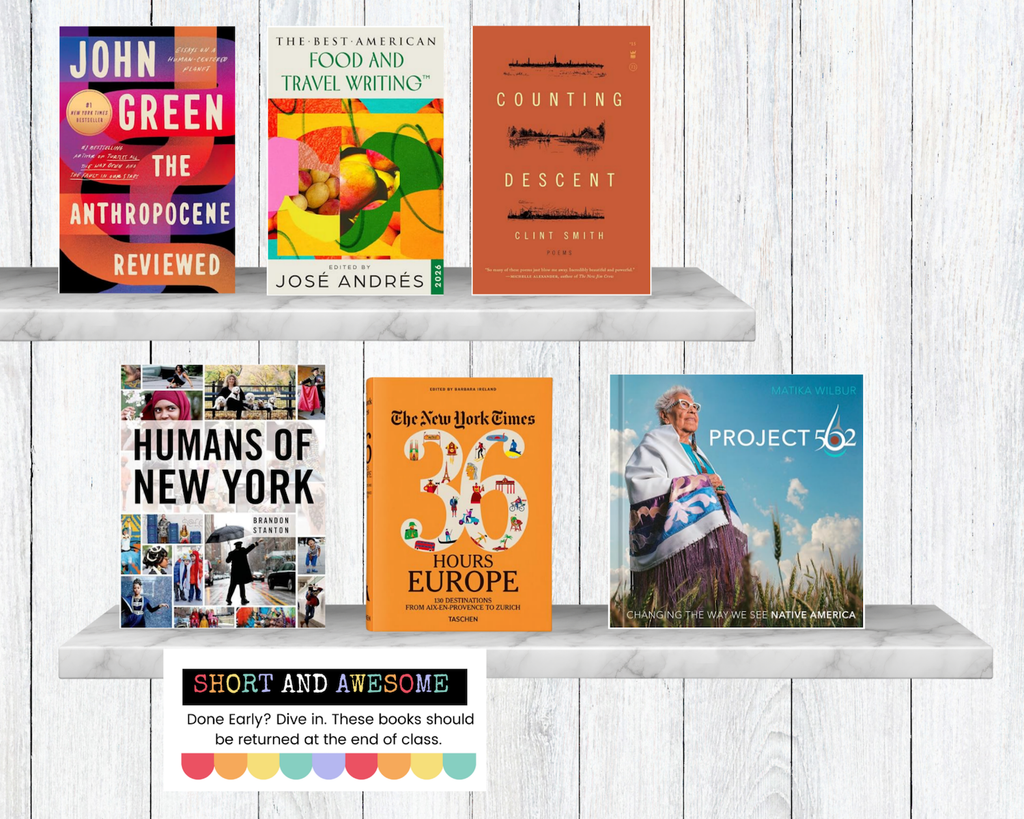
Book Screenshots from Amazon
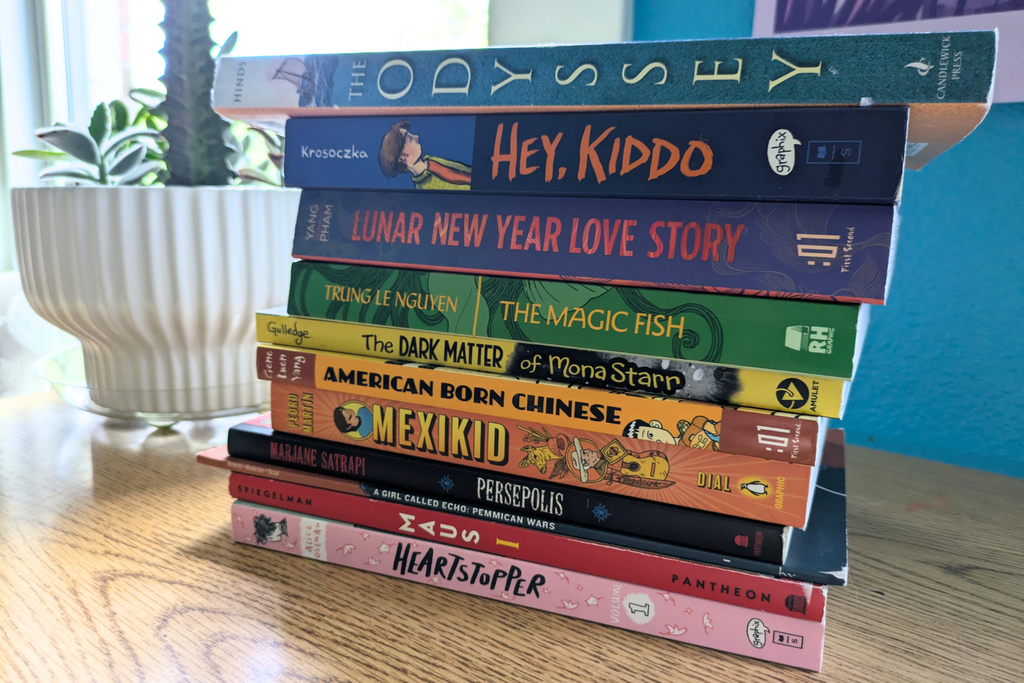
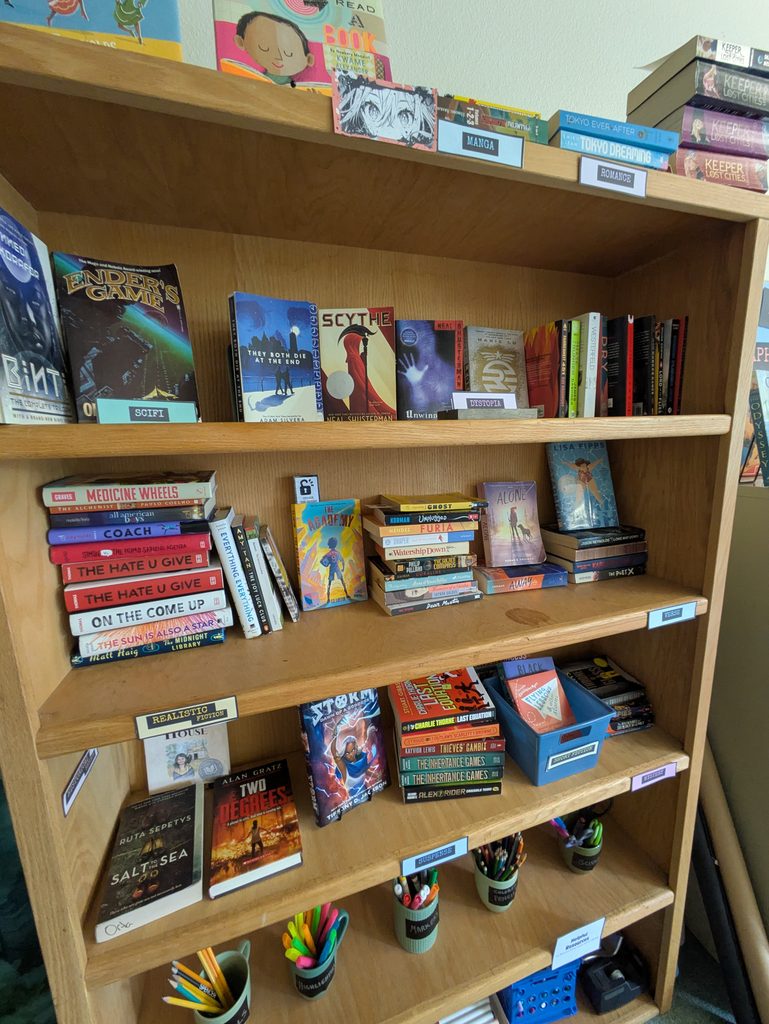
If you DO have a classroom library and an active choice reading program, students can always read their choice books as an early finisher option as well.
Integrate Early-Finisher Instructions within an Assignment
Claire English, of The Unteachables Podcast, first got me thinking about this idea with her detailed task cards. Her wonderful task cards give students a lot of information to help them succeed, including the criteria for doing the assignment well.
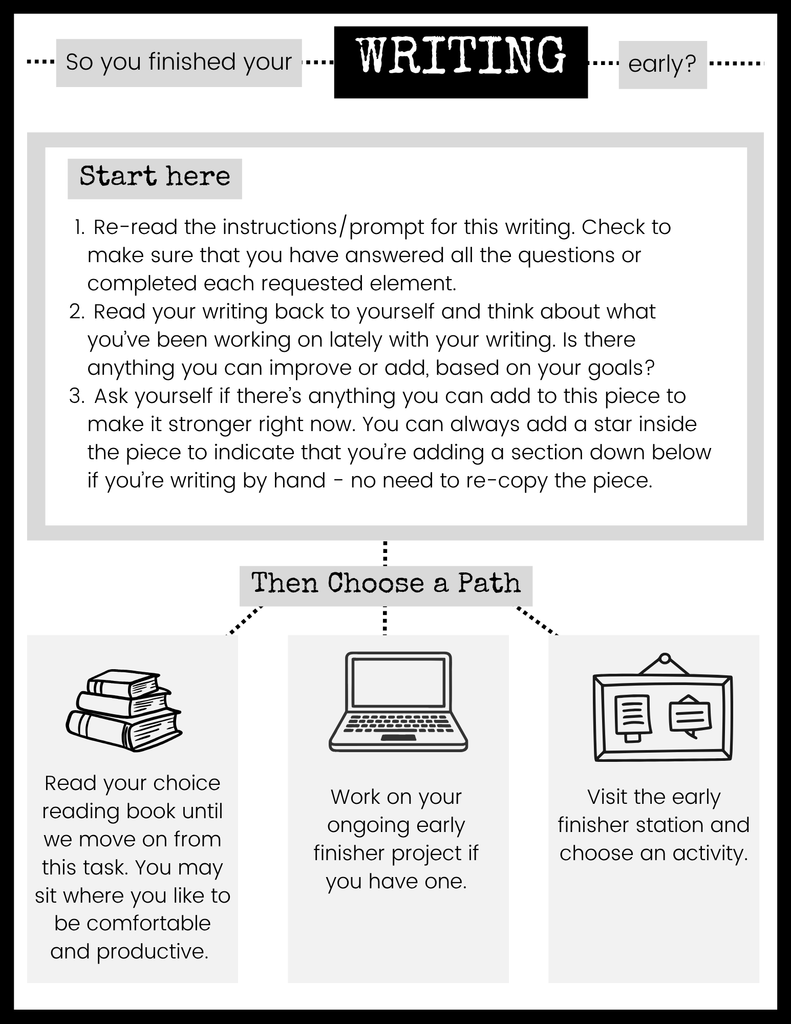
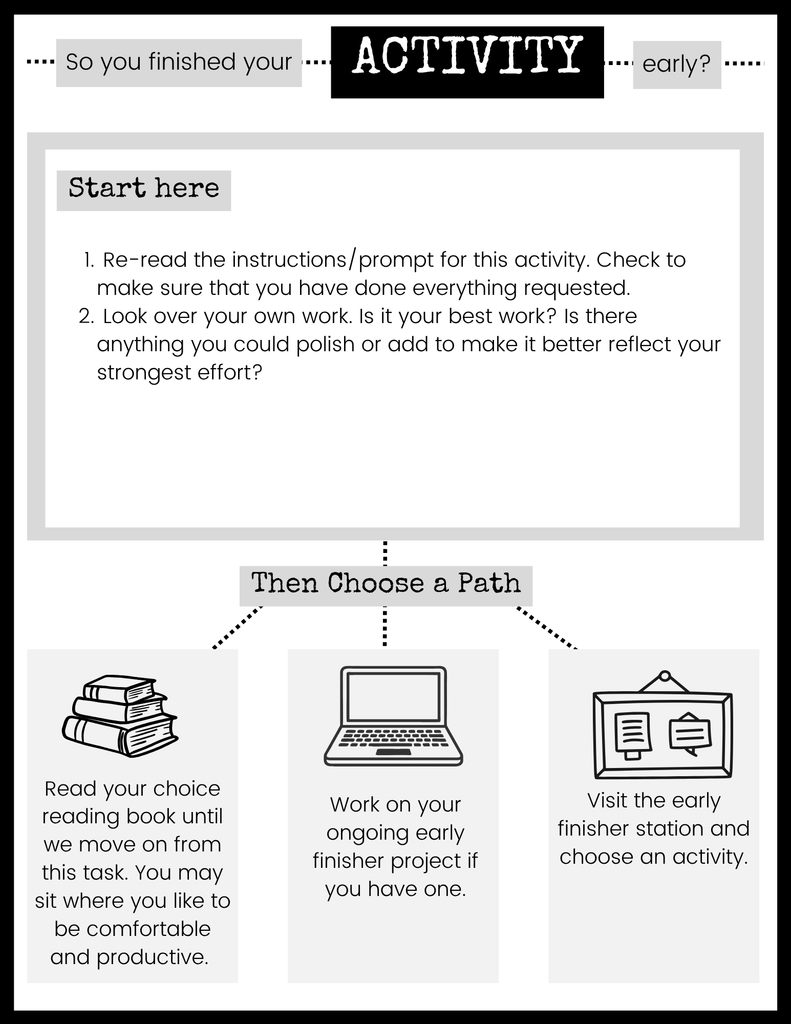
You could build a “Done Early?” section into your activity instructions, or you can create general pathways like the ones below, which guide early finishers to check back over their work and make sure they’ve crushed it, then choose an option for their extra time if they’re satisfied they’ve done their best work.
Students can look back at the prompt for a writing project or a classroom activity and make sure they’ve checked off all the requirements, then make any additions they can think of as directed, and then choose from among whatever activities you’ve got in place (like the one above and the ones below).
Set up a Choice-Based Early Finisher Station
For those 5-10 minute blocks of time when you want students to have a solid option but reading doesn’t feel right, a choice-based station is another option. You can create categories like “writing challenges,” “reading challenges,” and “enter a contest.” I suggest laminating the activities here so that they can be used by different students over time.
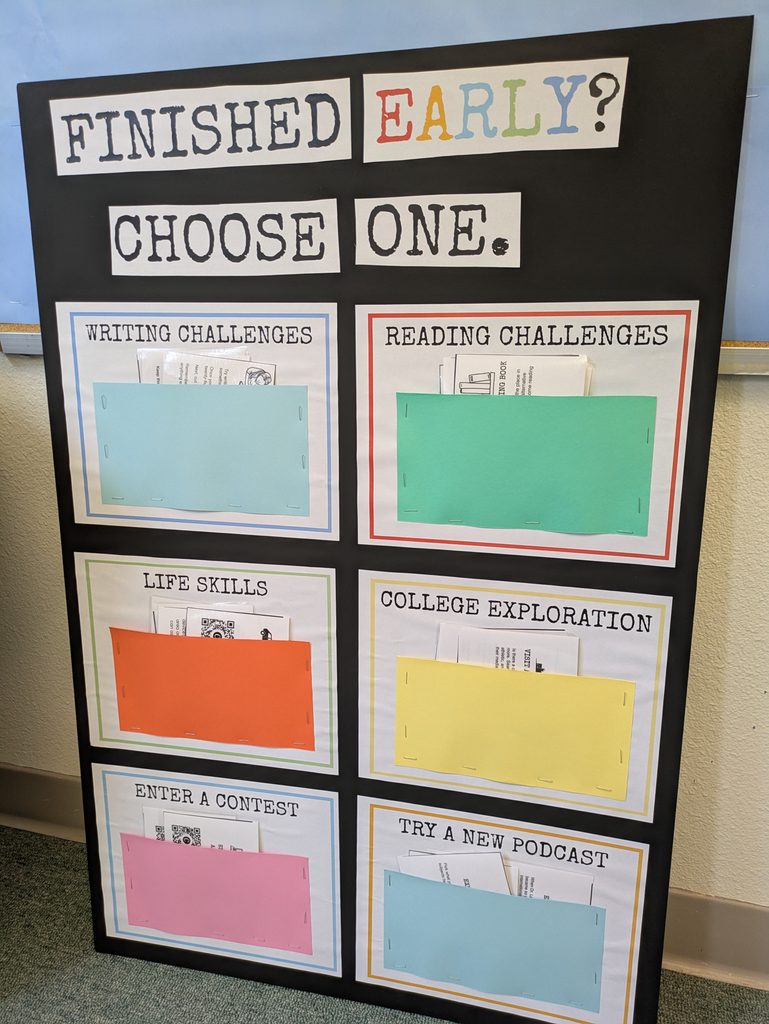
You can share writing contests, scholarship opportunities, fun writing prompts, suggestions to listen to interesting podcast episodes, invitations to explore information about the college application process, or whatever else you wish. As always when you offer choice, you increase student buy-in.
Add a Long-Term Option
Maybe you’ve noticed that some of your students are just always well ahead of the game, and you’d like to provide them more choice over their options, while still keeping them connected to ELA.
One option here would be to let them propose a long-term project of their own that connects to the discipline.
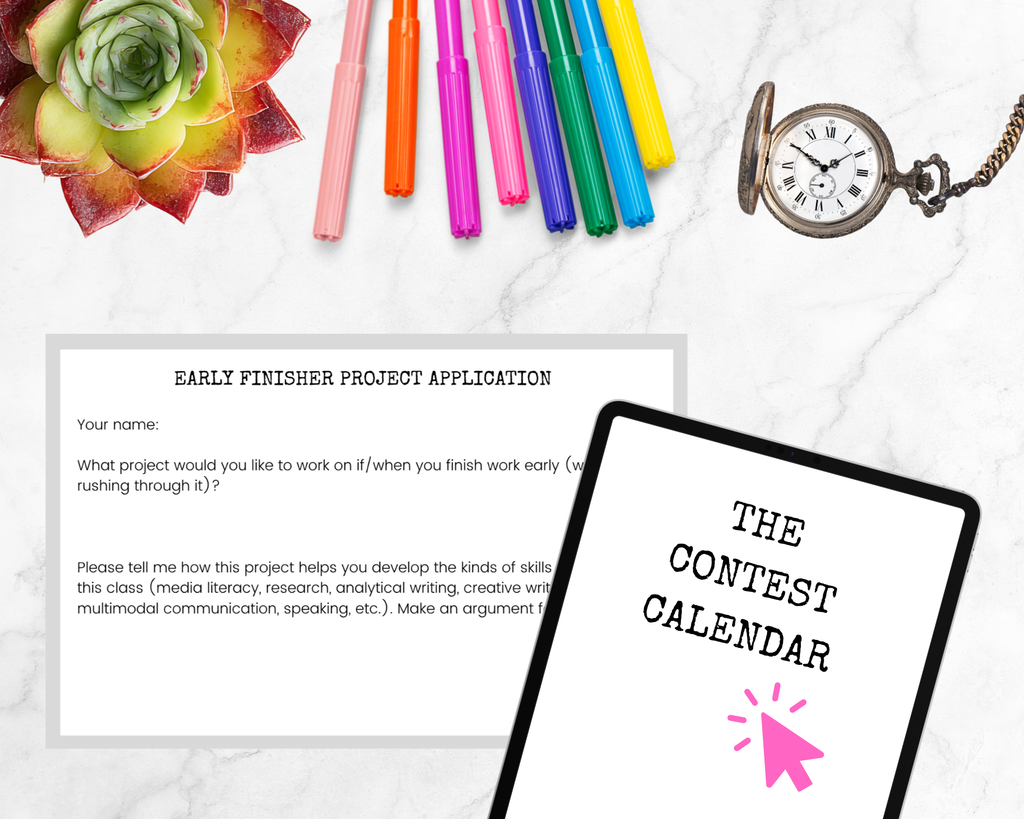
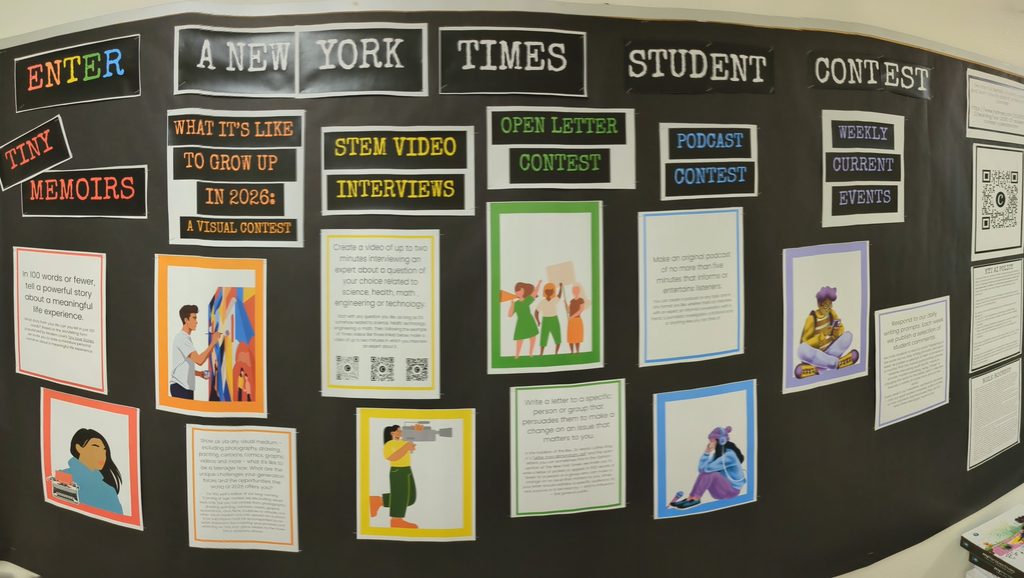
Another would be to guide them to the New York Times Contest Calendar and let them work on a contest piece for either whatever contest is current or one that is coming up down the road. In this case, they would return to their contest piece over and over whenever they have extra time in class from finishing work quickly. You might then invite them to share their draft with you for feedback (and applause) when it’s done, so you can encourage them in this cool independent effort.
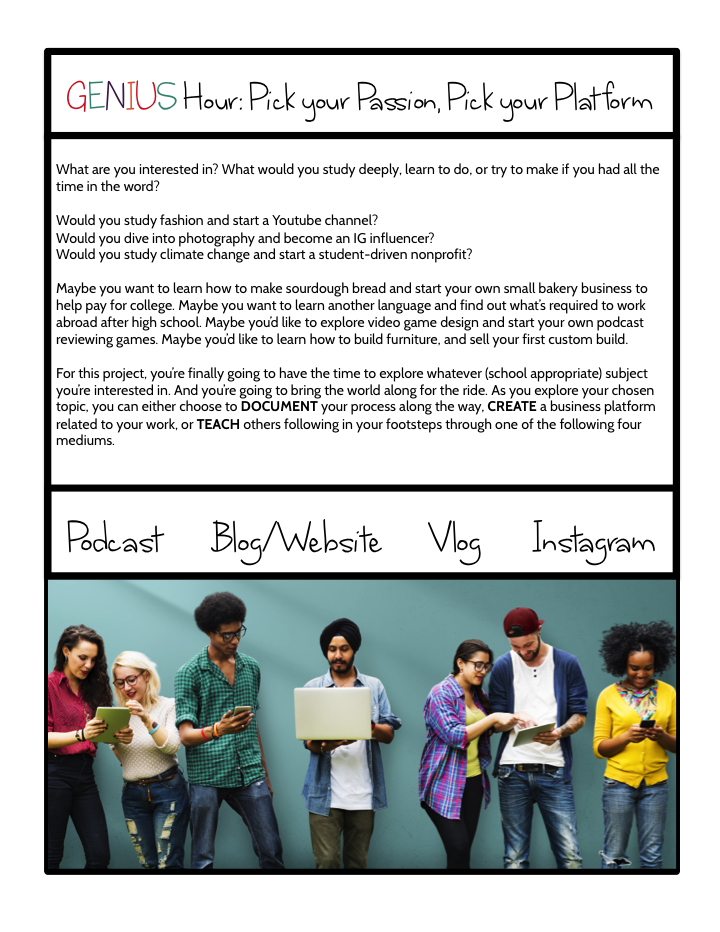
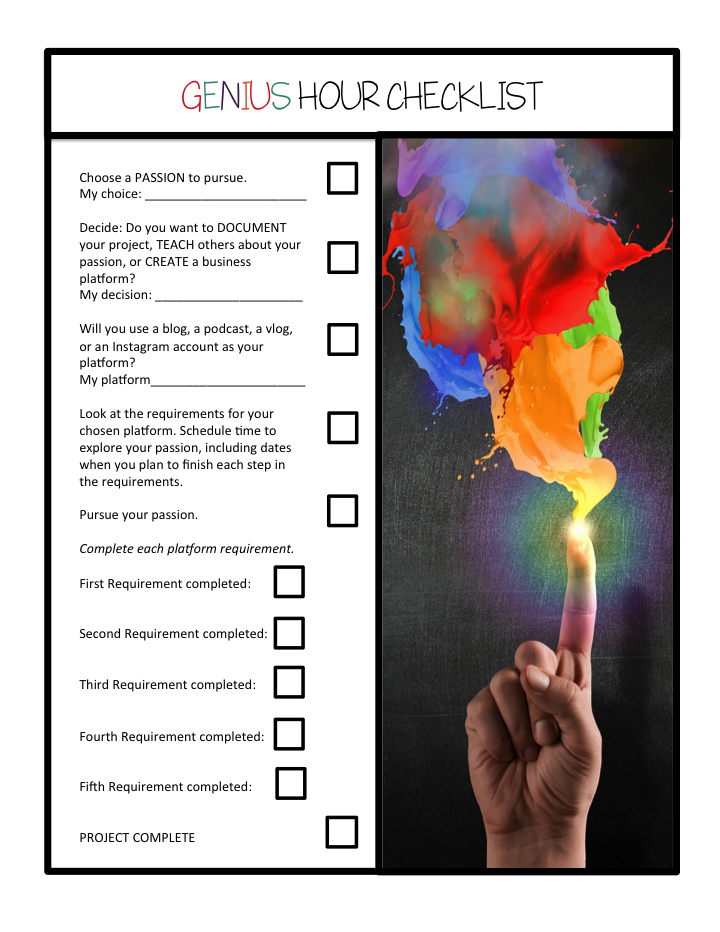
Genius hour would work well here too, as a long-term option. If you’re running a genius hour project that you return to throughout the year, your fast finishers who genuinely just work quickly could always work on their genius hour projects with any significant time blocks.

For Early Finishers, Think Flexibly Across the Year
When it comes to early finishers, a flexible approach can make your life easier. A kid who rushed and finished two minutes early can re-check their work based on early finisher directions and improve it for those two minutes. A kid who routinely does incredible work and finishes in half the time can choose to dive into a choice book or high interest short text, or to work on a long-term project like a submission to The New York Times Podcast contest. A student who is really focused on college right now and finishes ten minutes early for the first time in a while can head for the choice station and choose an activity in the college category that will let her explore scholarships, financial aid information, or college websites.
By having a few options at your fingertips, you can mix-and-match to suit your student and situation. And (hopefully) the more you make it clear that rushing will not lead to weekend chat and free time, the more students will quit doing it. Ironically, having a great plan for early finishers can help cut down on the need for a great plan for early finishers.