So here’s the thing. I know I talk a lot about reading. It’s pretty important to me. But all week I’ve been trying to prepare a different podcast, one NOT about the uncrackable justification for choice reading. But recently I heard from several teachers over in CHSE about thriving reading programs they had going, only to get shut down by folks who felt like reading in class was a waste of time. And then I kind of ended up in a rabbit hole, as I am wont to do. It’s like researching the justification for choice reading became my guilty pleasure, sucking up all my time. I listened to audiobooks on my walks, pored over research roundups and articles at the coffee shop, hit up the hammock with my Penny Kittle, and stared and stared and stared at the growing evidence mounting in my endless Google doc of notes.
The evidence is clear. The need for help for kids who don’t read, don’t like reading, and don’t want to read is great. And yet STILL we are prioritizing reading snippets and drilling for tests to “improve” our readers’ reading. I want you to have the information you need to fight. So here I am. Again. Despite my efforts to focus on something else this week. Let’s dig deep.
Let’s Talk about Cycles
Let’s start by talking about a couple of cycles that relate to reading. They’re both going to feel pretty familiar to you.
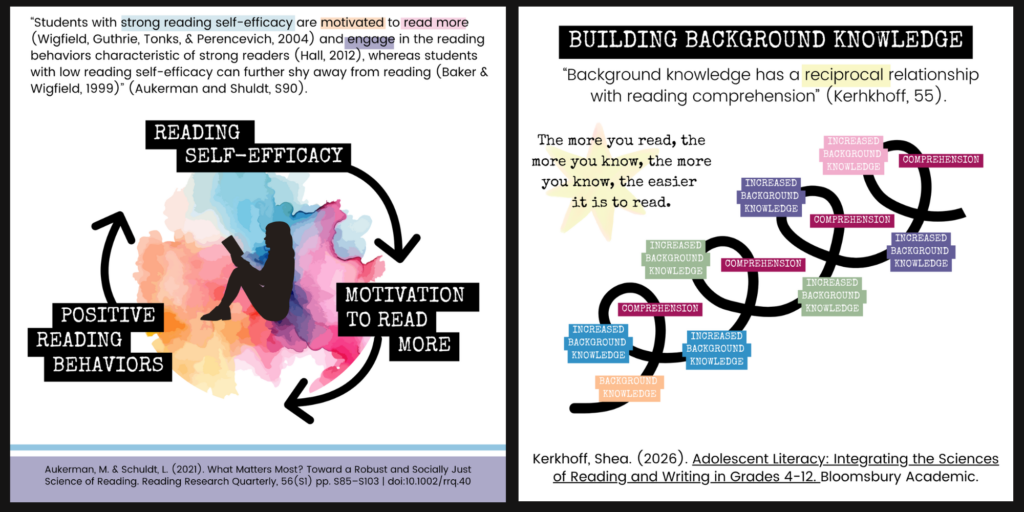
In one, detailed by Aukerman and Schuldt (2021), kids who have built up a sense of self-efficacy around reading are motivated to read, which allows them to practice the kinds of positive reading behaviors we’re looking for, which further develops their sense of reading self-efficacy.
Makes sense, right? They feel good about their reading, they read, they get better at reading, they feel good.
Sounds great.
But what about kids who don’t feel good about their reading? Who don’t have a sense of reading self-efficacy? Will they gain that self-efficacy and motivation, and therefore, get to practice positive reading behaviors, if they never get to choose books that they like and feel comfortable reading?
I don’t think so.
Does The Scarlet Letter feel like it’s going to be the gateway book that helps kids develop their self-efficacy? Maybe Dante’s Inferno? Or no, As I Lay Dying? I’ve read, and taught all these books, as well as dozens of other so-called classics from the so-called canon. I have a masters degree in English, and I have loved these books. My favorite paper in college was on Milton’s Paradise Lost, arguing that Milton liked Satan best and made him the hero of the story, and I honestly had so much fun writing it. But I can also, honestly, tell you that I developed my sense of reading self-efficacy reading the entire Anne of Green Gables series over and over again after my grandparents bought me the entire pastel rainbow set. And bringing home stacks of chapter books from the library in a grocery bag, because there were too many for me to carry. And devouring The Lord of the Rings series over a week-long vacation at a tiny cabin in the woods in middle school. By the time I hit my first Dickens road bump, I was already driving an SUV. I believed I could read Dickens. I knew how to figure out what was going on. And I ploughed through and continued to think of myself as a good reader, though I didn’t necessarily love Dickens.
Now let’s look at another cycle, this time detailed by Shea Kerkhoff (2026).
It goes like this: the more you read, the more you know, the more you know, the easier it is so read.
Reading comprehension is much easier when you have the background knowledge it takes to make sense of the reading. How do you get background knowledge? From reading. So when you read, you learn more about the world. Knowing more about the world makes it easier to read. And so on forever. As Kerkhoff puts it, “Background knowledge has a reciprocal relationship with reading” (55).
So what happens when kids don’t read? Reading gets harder. One could maybe infer from Kerkhoff that if background knowledge has a reciprocal relationship with reading, not having background knowledge has a reciprocal relationship with not reading. So should we make the path back to reading run through only the kinds of books kids don’t choose, or also include choice reading? Hmmmm…..
Let’s talk about Leaders
So there’s a strong start to our choice reading justification,. Kids need to develop reading self-efficacy and background knowledge. Wide and deep choice reading will help a great deal with this.
Next, let’s consider what educational leaders are saying.
Kelly Gallagher shares in Readicide that he keeps 2000 books in his room, inspired by Warwick Elley’s “Book Flood” projects and his own personal experience with the power of having books available right at the fingertips of his high schoolers. He divides his curriculum up, giving choice reading 50% of his curriculum.
Daniel Willingham, an author and cognitive scientist, discusses the unparalleled power of reading to expose students to new words and vocabulary in his book, Why Don’t Kids Like School? “Do whatever you can to get kids to read,” he writes in chapter two, “but it’s not enough.”
Nancie Atwell shares her pioneering reading workshop method in The Reading Zone, layering stats to help illuminate the power of the kind of voluminous reading she is advocating for: “The top 5 percent of U.S. students read up to 144 times more than the kids in the bottom 5 percent” (107).
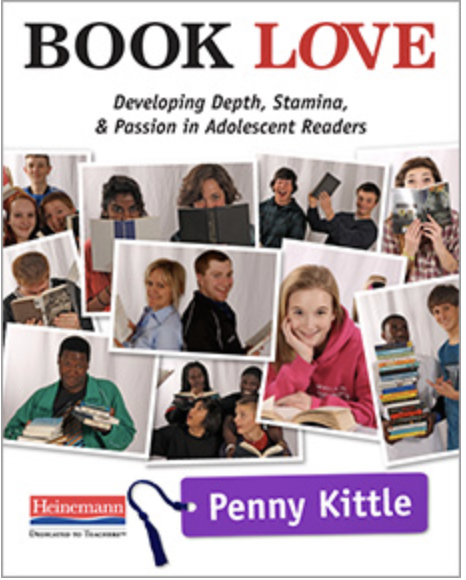
Penny Kittle makes a beautiful argument for choice reading in her book, Book Love, with a blueprint for action embedded inside. But one of the most striking arguments I picked up from her was this: “A book isn’t rigorous if students aren’t reading it” (xvi). She shares story after story of interviewing students to hear that they read *maybe* one of the required teacher-selected books in their entire high school English class career before arriving in her class their senior year and reading stacks that they chose themselves.
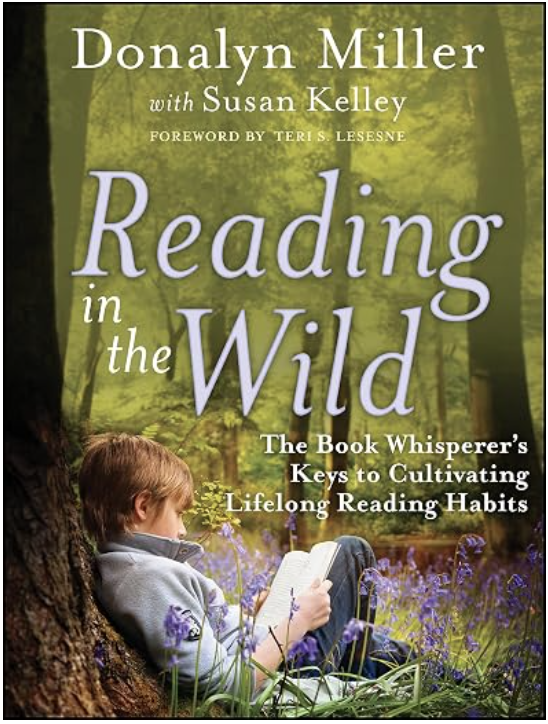
I could go on, of course. A landslide of teacher leaders argue for the power and relevance of choice reading. Donalyn Miller. Terry Lesegne. Kylene Beers. Most recently, Jarred Amato. Here are some books I’ve read about this, and I would recommend them all for different reasons.
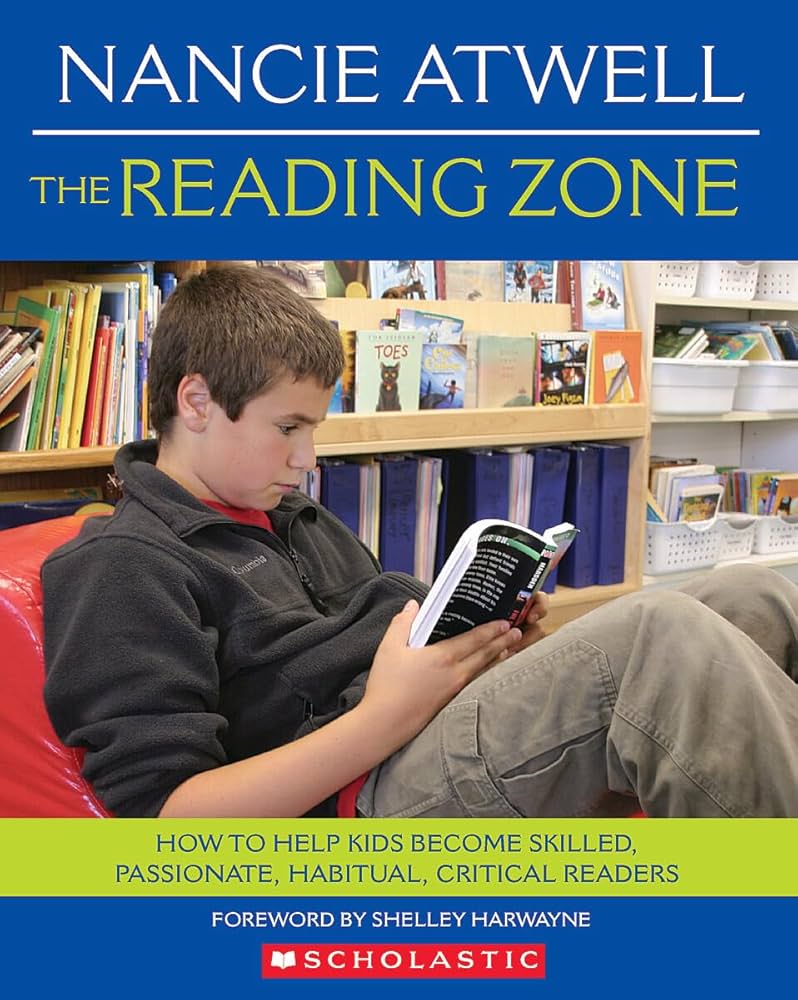
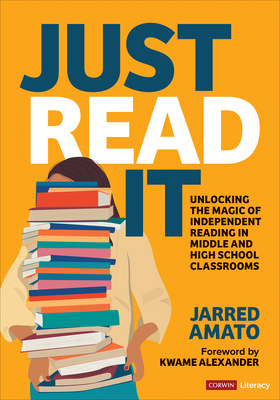
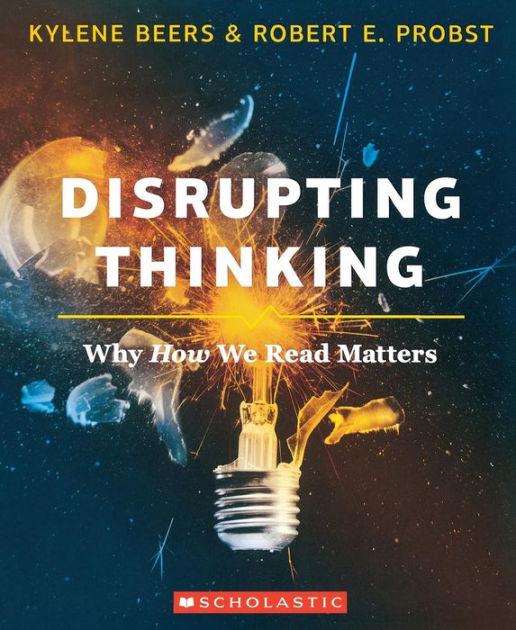
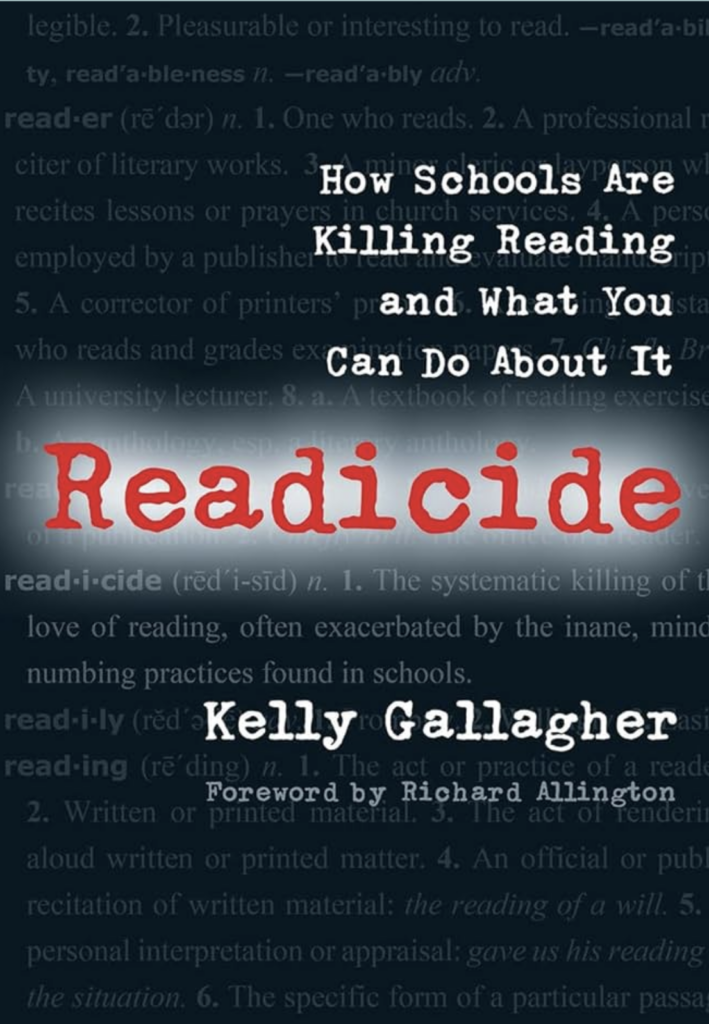
Let’s talk about Research
So since the logic of “wide choice reading they enjoy will help students guided by good teachers read more and become better at reading, and so many incredible teachers have found this to be true” isn’t enough to validate choice reading in the face of the all-powerful standardized test, let’s look at some research.
Did you know (I bet you did)?
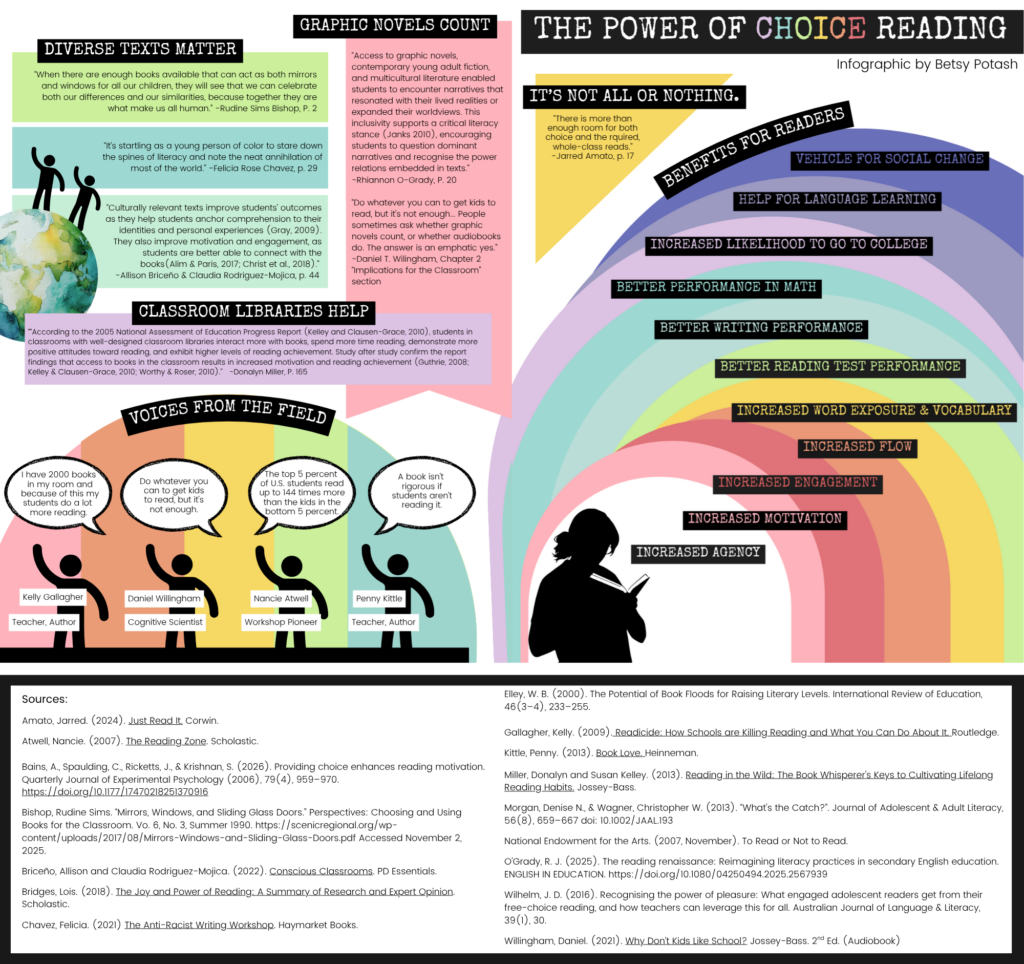
Here are some benefits of choice reading, with the authors in whose articles or books I found the details referenced afterwards and then fully in the sources below.
- Increased Agency (Morgan & Wagner)
- Increased Motivation (Miller, Morgan & Wagner, Baines)
- Increased Engagement (Morgan & Wagner, Baines)
- Increased Flow (Miller, Morgan & Wagner)
- Increased Word Exposure & Vocabulary (Miller, Willingham)
- Better Reading Test Performance (Wilhelm, Atwell, NEA, Morgan & Wagner)
- Better Writing Performance (Wilhelm, NEA)
- Better Performance in Math (Wilhelm, Atwell)
- Increased Likelihood to go to College (Miller)
- Help for Language Learners (Bridges, Elley)
- Vehicle for Social Change (Wilhelm)
That’s a LOT of benefits. Wouldn’t you say? Wouldn’t we all say so? And they INCLUDE better test performance.
I wonder if studying test-taking strategies and passage practice increases agency, motivation, engagement, flow, vocabulary, writing ability, math performance, college matriculation, second language learning and social mobility.
Hmmm.
I’m going to leave you with an infographic I made for you, in the hopes that you can share it with others who may question your classroom library, your diverse texts, your graphic novels, your First Chapter Friday series, and your choice reading program.
When they ask you why you aren’t having students read dry, unrelated passages as fast as they can in order to regurgitate what they’ve read through multiple choice questions, or why you aren’t spending all of your time exclusively on canonical “classics” written by white men hundreds of years ago, I hope this infographic can help you explain what you’re trying to do.
I wish I had had this fifteen years ago when I tried to argue for the power of choice at my school, and was so overwhelmed by my wish to express what I was seeing in front of me every day in the face of the total rejection for my ideas I was getting in the conversation, that I couldn’t stop crying.
Sources:
Amato, Jarred. (2024). Just Read It. Corwin.
Atwell, Nancie. (2007). The Reading Zone. Scholastic.
Aukerman, M. & Schuldt, L. (2021). “What Matters Most? Toward a Robust and Socially Just Science of Reading.” Reading Research Quarterly, 56(S1) pp. S85–S103 | doi:10.1002/rrq.40
Bains, A., Spaulding, C., Ricketts, J., & Krishnan, S. (2026). Providing choice enhances reading motivation. Quarterly Journal of Experimental Psychology (2006), 79(4), 959–970. https://doi.org/10.1177/17470218251370916
Bishop, Rudine Sims. “Mirrors, Windows, and Sliding Glass Doors.” Perspectives: Choosing and Using Books for the Classroom. Vo. 6, No. 3, Summer 1990. https://scenicregional.org/wp-content/uploads/2017/08/Mirrors-Windows-and-Sliding-Glass-Doors.pdf Accessed November 2, 2025.
Briceño, Allison and Claudia Rodriguez-Mojica. (2022). Conscious Classrooms. PD Essentials.
Bridges, Lois. (2018). The Joy and Power of Reading: A Summary of Research and Expert Opinion. Scholastic.
Chavez, Felicia. (2021) The Anti-Racist Writing Workshop. Haymarket Books.
Elley, W. B. (2000). The Potential of Book Floods for Raising Literary Levels. International Review of Education, 46(3–4), 233–255.
Gallagher, Kelly. (2009). Readicide: How Schools are Killing Reading and What You Can Do About It. Routledge.
Kerkhoff, Shea. (2026). Adolescent Literacy: Integrating the Sciences of Reading and Writing in Grades 4-12. Bloomsbury Academic.
Kittle, Penny. (2013). Book Love. Heinneman.
Miller, Donalyn and Susan Kelley. (2013). Reading in the Wild: The Book Whisperer’s Keys to Cultivating Lifelong Reading Habits. Jossey-Bass.
Morgan, Denise N., & Wagner, Christopher W. (2013). “What’s the Catch?” Journal of Adolescent & Adult Literacy, 56(8), 659–667 doi: 10.1002/JAAL.193
National Endowment for the Arts. (2007, November). To Read or Not to Read.
O’Grady, R. J. (2025). The reading renaissance: Reimagining literacy practices in secondary English education. ENGLISH IN EDUCATION. https://doi.org/10.1080/04250494.2025.2567939
Wilhelm, J. D. (2016). Recognising the power of pleasure: What engaged adolescent readers get from their free-choice reading, and how teachers can leverage this for all. Australian Journal of Language & Literacy, 39(1), 30.
Willingham, Daniel. (2021). Why Don’t Kids Like School? Jossey-Bass. 2nd Ed. (Audiobook)