“What’s this?” I was crouched alongside a student on the first day of school as she filled out her reading profile. She pointed her pink highlighter at the section of genres, unsure how to proceed.
I wanted to know if she liked scifi or romance, dystopia or suspense or YA.
She wanted to know what they were, and she wasn’t the only one to ask.
So I pushed back my plans for the next class a bit, and made time for a lesson on genre instead. And it was such a blast, I want to share it with you today, in case your students are asking the same questions as mine.
Today I’ll walk you through a speedy way to introduce the idea of genres across artistic disciplines, a fun option for brain-dumping the background knowledge kids may or may not realize they’ve already got when it comes to genre, and then a game you can play to bring it all together that’s not just great retrieval practice, but also helps bond your new community of kids as they get to know each other.
Part One: What’s a genre?
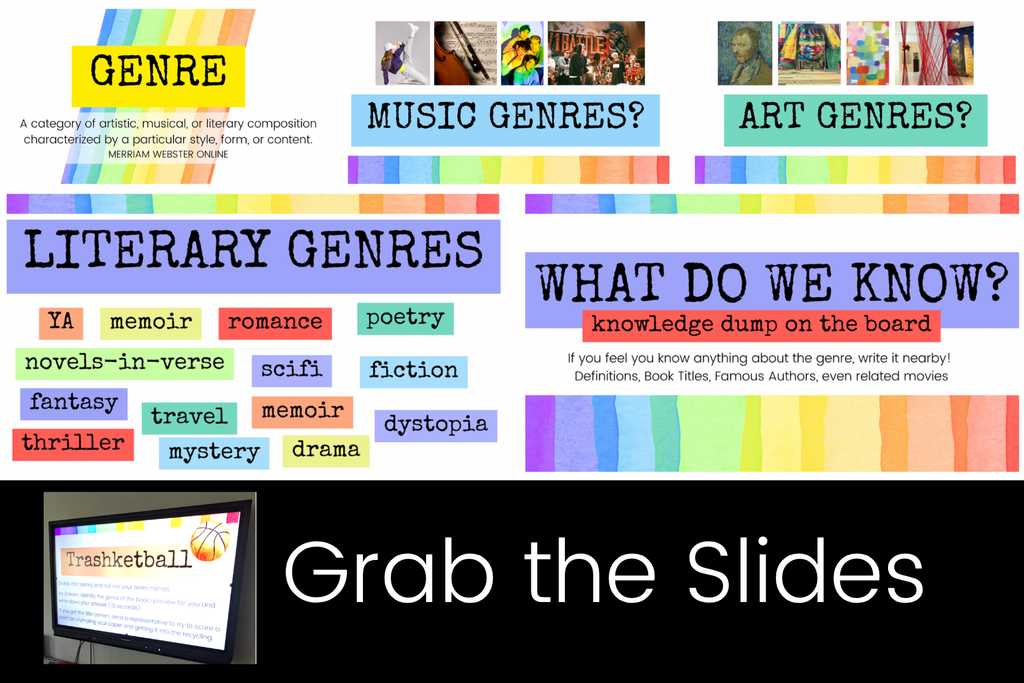
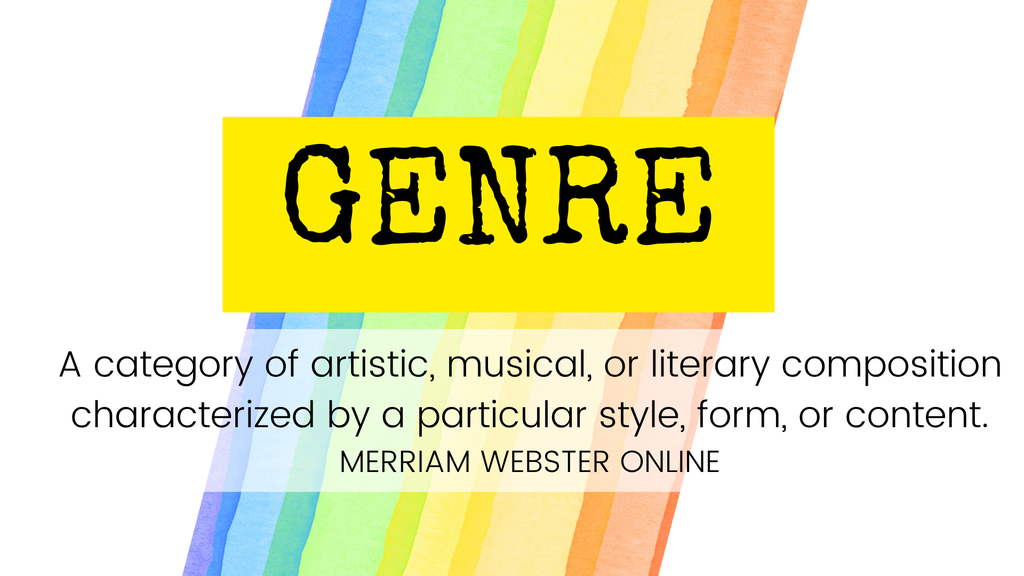
I wanted to start the lesson by helping students realize they knew more about genres than they thought, and connect the concept to other areas where they might be more familiar. So we opened with a quick definition, then moved right into musical genres.
The kids had no trouble identifying the genres on my music slide (hip hop, classical, Kpop, and rap), and then I ran them briefly through the art genres on my art slide (Impressionism, street art, contemporary, installation).
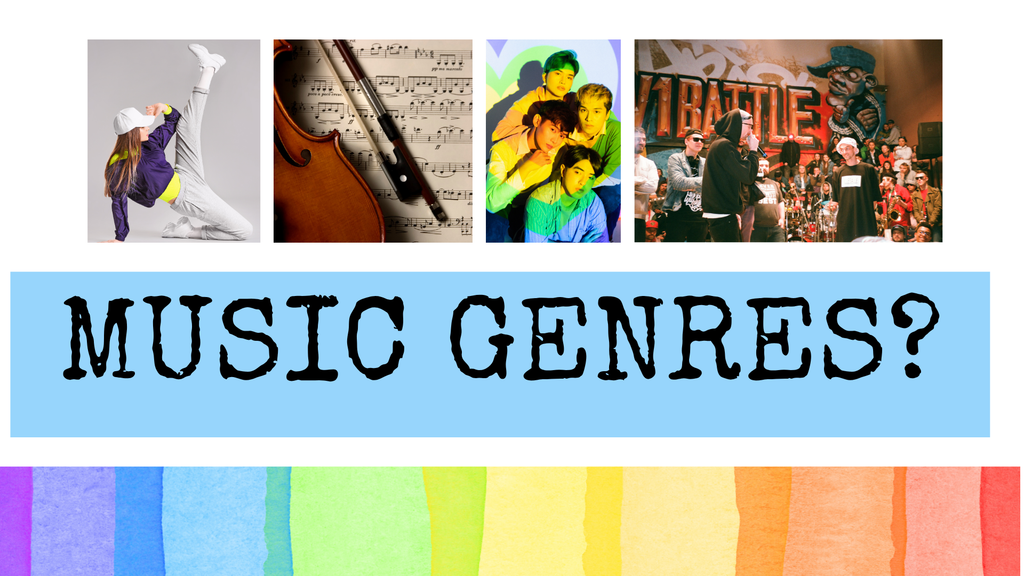
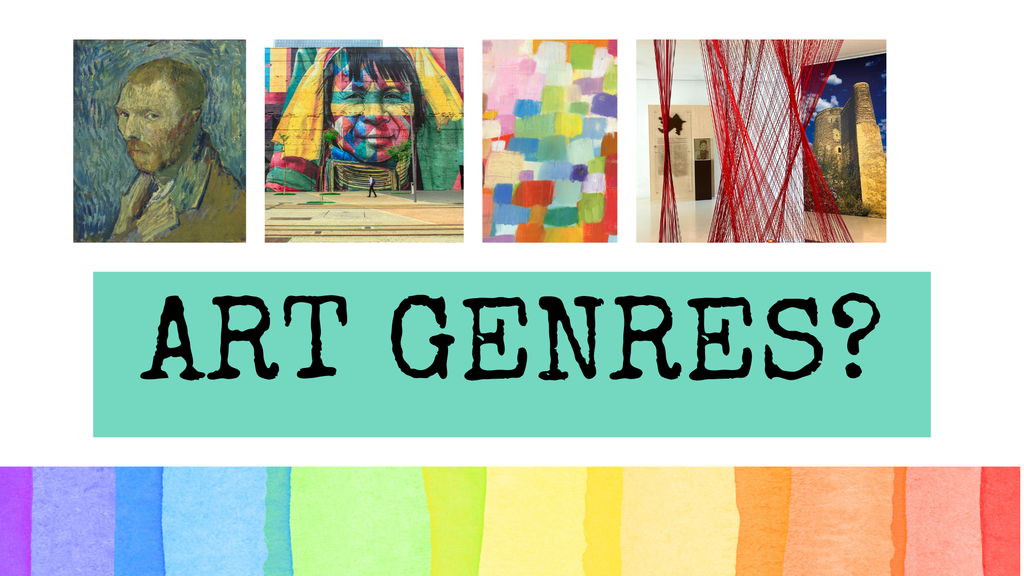
The goal here was to get them thinking about breaking down an art form into a rainbow of categories.
By the way, if you’d like to use my slides for this lesson, here they are (make your copy).
Part Two: Literary Genres Background Knowledge Mixer
Everyone seemed very comfortable with things so far, nodding along that they were actually pretty aware of the idea of genre.
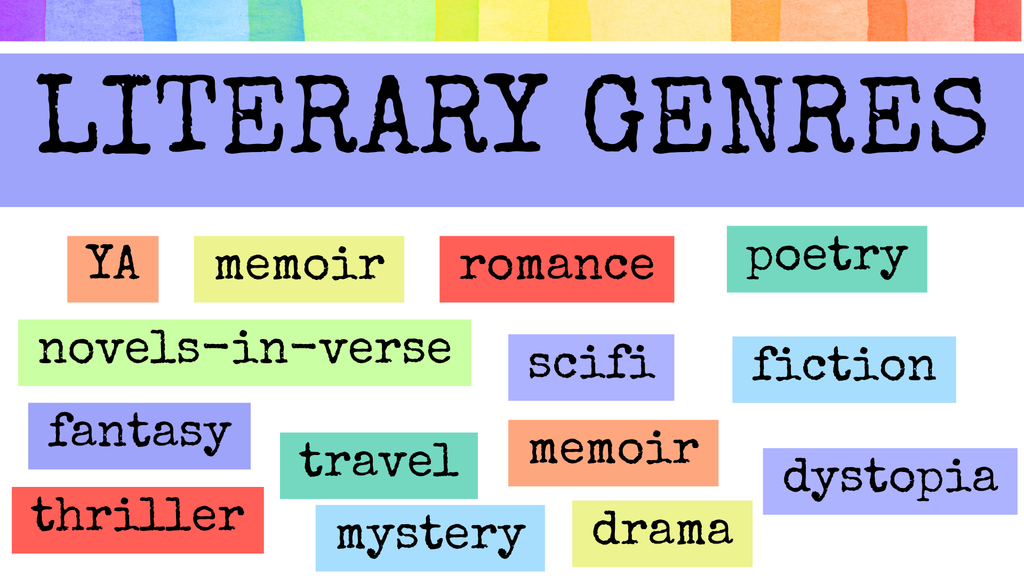
Next, we slid into literary genres.
I popped up a big list of genres on a slide, genres I had already written all over the board in a big colorful grid.
I read them out, then invited students to notice them on the board and flipped to my “knowledge dump” instructions.
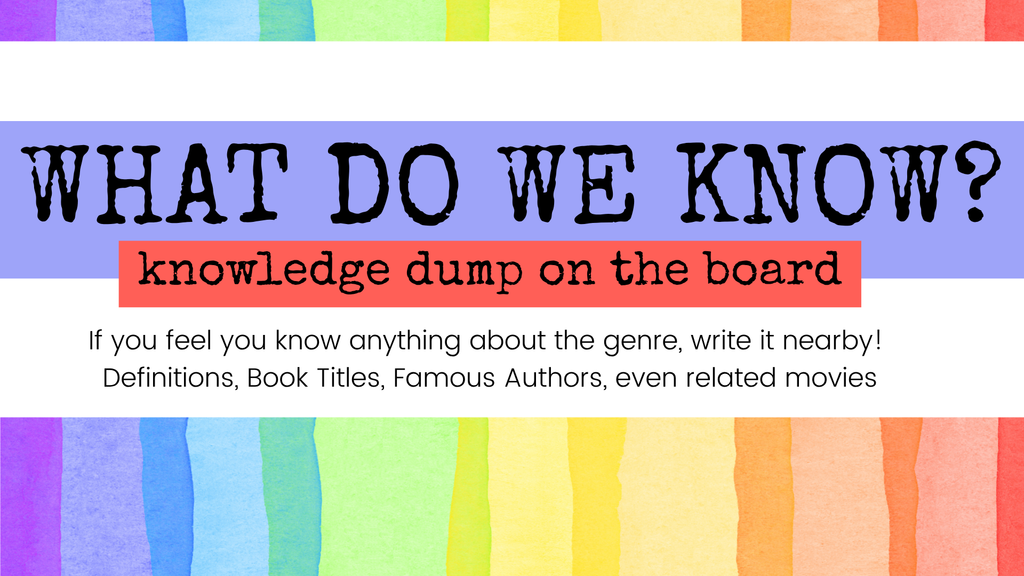
For the next five minutes, everyone grabbed a whiteboard marker and added notes to the genre grid. I encouraged them to add any notes, drawings, book titles, movie titles, etc. that came to mind when they saw the genre. I told them to please not worry about being wrong, since we were just trying to get all of our ideas up to discuss.
I have a small class, so we didn’t have any trouble gathering at the board to work.
With a very large class, you might want to do this with chart paper around the room, or use multiple white boards if you have them.
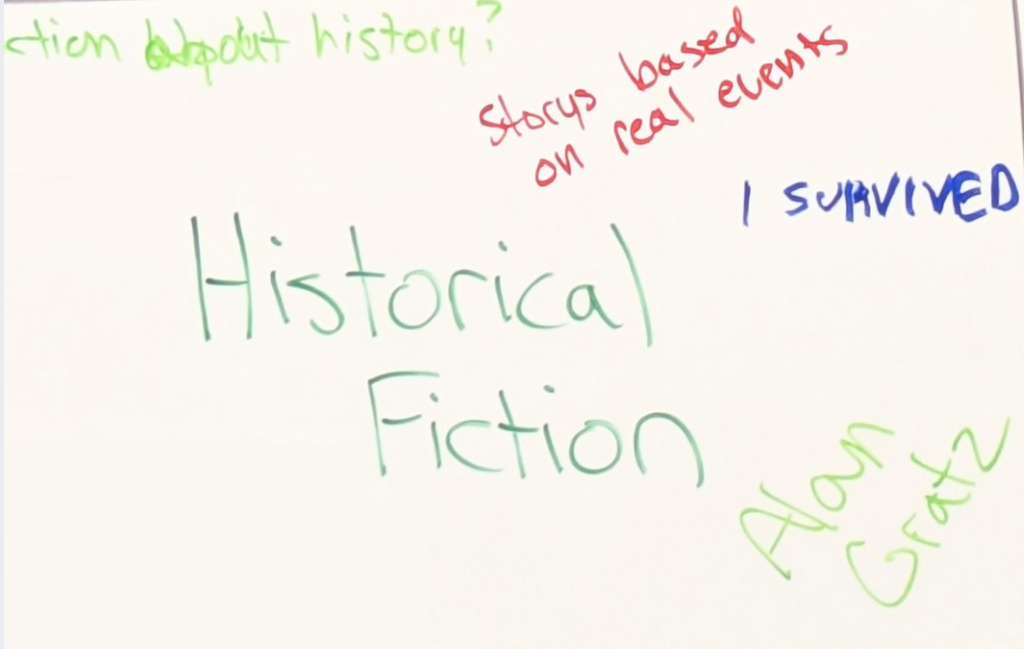
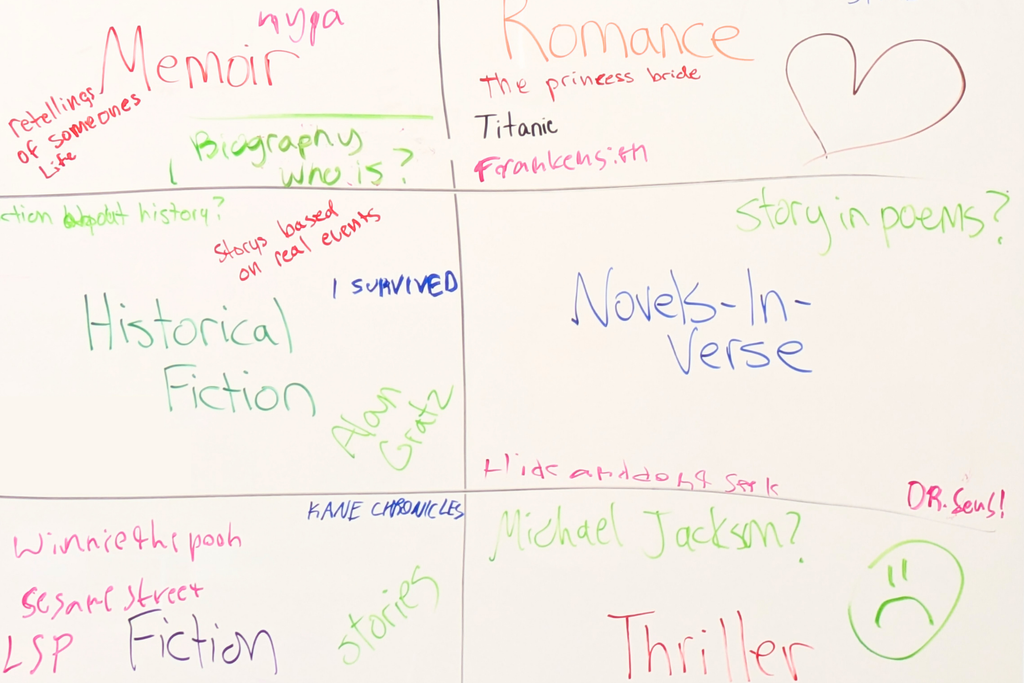
As students jotted down ideas, I went ahead and added a few little drawings and notes to genres that weren’t getting much love.
Once the energy was fading, we went through the genres together out loud. I highlighted correct guesses, titles, and authors, and clarified where information wasn’t quite on target. It didn’t take long. Students had accessed quite a bit of genre knowledge in the background knowledge dump.
They were most confused by the idea of YA – are YA books supposed to be the only genre teens read? Because teens read a lot of genres. I clarified that teens should never feel limited to books labeled as YA.
Looking back, I realize I want to clarify further, that YA is a label that can often come in a pairing.
Something could be YA dystopia, YA historical fiction, etc. Kind of like how a graphic novel can be dystopian, fiction, memoir, etc. In fact, there could be a YA dystopian graphic novel. Maybe even a YA scifi dystopian graphic novel… But even so, students can feel free to range well beyond the YA label to find the books they love.
Part III: Genre Trashketball
OK, now we’ve reached the fun wrap for this lesson – trashketball. This is a game that has been played by many teachers – I got the full instructions from Jennifer Gonzalez over on Cult of Pedagogy, in her post, How to Play Crumple and Shoot.
My students were pretty skeptical as I explained the instructions and had them get into teams to give me their team names. But actually the game was a blast, and an easy way for them to immediately retrieve everything they had just learned. Let me walk you through it.
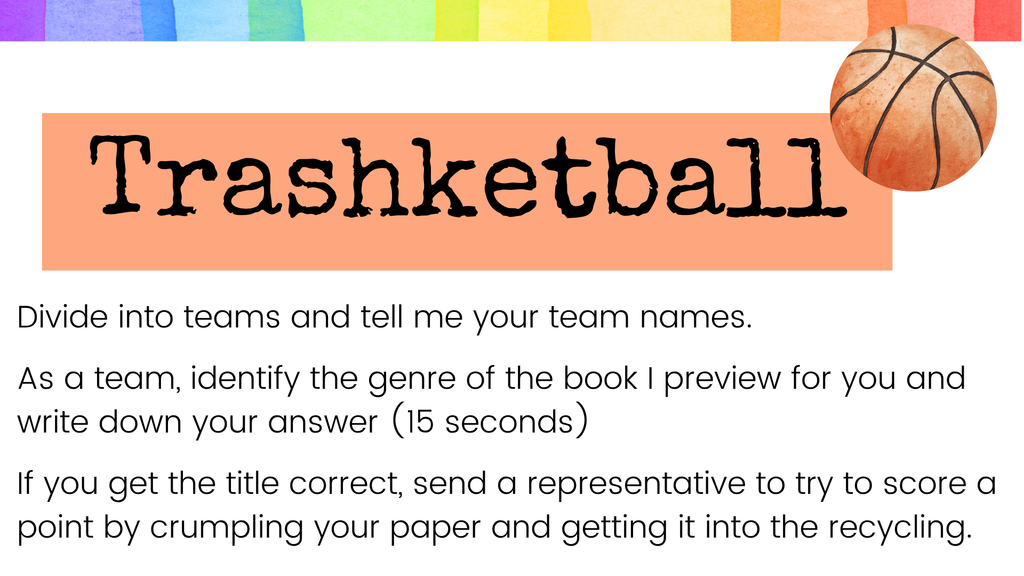
Once I had the team names on the board, and both teams had 1/4 sheets of paper to write their answers on, I began to pull from the stack of books I had collected from our classroom library behind me. For each book, I’d show it to the teams and then usually read something out loud from the back or describe the plot in brief.
Their goal? Write down the genre on their answer sheet. I’d give them 15 seconds or so to discuss and write.
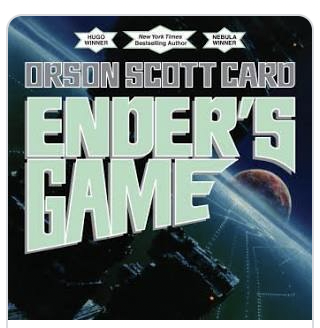
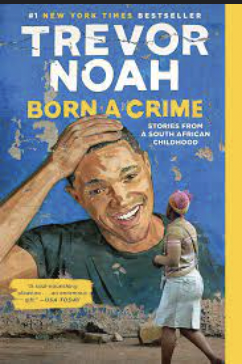
(Book screenshots from Amazon)
So, for example, I pulled Trevor Noah’s Born a Crime, because I think a lot of kids would like reading it, and it’s a perfect example of memoir. This game offered the chance to not only help kids retrieve their genre knowledge but also give a tiny push for each book I held up, activating reading interest.
I read a few quotes from the back about Trevor Noah’s gifted storytelling prowess, and reinforced that the book was written by Trevor Noah about his real life.
Every team wrote “Memoir” on their sheet, then sent representatives to the line of painter’s tape I had set up about six feet from the recycling bin. Their teams cheered them on as they tried to shoot their crumpled up answer into the bin for a point.
Rinse and repeat – we played about fifteen rounds, so that I could hit the rich variety of genres on display in our library and reinforce as much of what they had just learned as possible.
The teams were correct every time, though they didn’t always manage to score. The tension and cheering ran high in the final round as the final team tried to score for a championship tie, and managed it.
Moving Forward
I feel more confident moving forward with this group that they now understand genre as a concept, and that they can more comfortably choose books within my library based on their interests.
The ninth grade course focus at my new school is “genre,” so this was an important foundation for us to build for multiple reasons. We’ll tackle a Shakespeare play (Romeo & Juliet) both in the original and graphic adaptation versions, a YA novel-in-verse (Long Way Down), various written and performance poems, a scifi short story (“The Paper Menagerie”), a selection from at least one memoir (Born a Crime), and YA fiction (The Outsiders) this year.
Try it for Yourself
This is an easy lesson to adapt and try for yourself.
Just grab the slides, put up your genre grid on the board for the knowledge dump, and then, for trashketball, position your recycling bin and a line of tape, cut out some paper for answer sheets, and grab a fun bookstack of selections from varied genres.